Thursday, February 27, 2014

[TV Review] Scandal Re-cap and Mid-Season Premiere


“Hi Livvie, I know you must be angry with me, but I just wanted to hear your voice.  Don’t worry sweetheart, I’ll see you real soon.”

Those would be the last words we would hear from Scandal’s fall mid-season finale. The ABC drama following Olivia Pope (Kerry Washington) as a DC-based fixer known for her dictum, "it's handled," took us on a whirlwind of ride, leaving us with three ridiculous cliffhangers to think about going into 2014. We see everything from vice president Sally Langston murdering her philandering closeted husband, to Quinn ready and willing to slay Eli, and finally Olivia realizing “mother dearest” is not the angel she thought. 

But the wait is over. Twelve weeks later we can now finally say, “Gladiators, It’s Scandal Thursday!!” Finally, Olivia Pope & Associates are making their way back into our lives via the television screen. It has been so long.

Now, it has been quite awhile since the last episode aired, December 12th to be exact. So just in case you do not feel like logging into ABC.com, Hulu, or Netflix and watching last year’s episodes here is a quick recap to get you ready for tonight:

a)     The Last Word: Probably the most disturbing event that would take place during the fall season was the epic fight between Sally and Daniel Douglas over his rendezvous with James, resulting in the infamous line from Sally,
 “I cannot wait until you meet your maker. I cannot wait until you are judged for your lies,” and a letter opener in Daniel’s back leading to his unfortunate demise.
b)     Not Everyone is Your Friend: Quinn must deal with the regret of letting Charlie into her life as she suffers daily, mentally and physically (pulling out the chip in her tooth with a paper towel dispenser). Just when she thinks she can make her way back into Olivia Pope & Associates, she is met by Huck who informs her: “You’re not a Gladiator anymore.” After hearing those shell-shocking words, Quinn runs back to the Devil to try and figure out how she will get herself out of this dark, sinking pit. But on a brighter note, at least Eli lived to see another day.
c)     Don’t Mess With Daddy Pope: In what might be seen as a dysfunctional heart-to-heart, Fitz, who is holding Eli hostage, proceeds to tell his mistress’ father all the naughty and nasty things he has done to his little girl. “The things I could tell you about the way she tastes…” BUT, in the words of Daddy Pope who would so eloquently put Fitz into his place, “You love that she is a door marked exit… Don’t use the person I made to make yourself into a man. You are a boy!” [drops mic]
d)     An Angel Dressed in the Devil's Clothes: Meanwhile, while Fitz and Eli are showing off egos, Olivia has other family drama that she must tend to dealing with her mother who has now been identified as a terrorist. “She fooled you like she fooled me, didn’t she?” Maya is beginning to shows her true colors as both Eli and Olivia have been duped by a woman they each loved dearly at one point in time.
e)     The Revealing Phone Message: Let’s not forget the woman in David Rosen’s office with the tape of Sally’s phone call to Cyrus after killing Daniel. That will not end well for anyone.
f)       A New Sheriff in Town: Let’s just say Jake has taken over the ranks of B613, and his dismissal of Eli is quite epic, “If you’d like a job here at Wonderland, you can take our aptitude test.”

Needless to say, after these first ten episodes we are still in limbo as to what is going on in the life of Harrison, despite having the various breadcrumbs sprinkled throughout the episodes.

All in all, the mid-season finale would pose as many questions as it attempted to answer. Here are just a few questions that would surface, and we hope will be resolved:
1)     What kind of B613 leader will Jake be?
2)     Will David team up with Olivia Pope & Associates for his investigation of Daniel Douglas’ murder?
3)     What does the future hold for the show’s unlikely couple, Quinn and Charlie?
4)     Will we delve deeper into Maya’s dark past and how will affect the already fragile relationship between her and Olivia?

Tonight’s episode is titled, “Ride, Sally, Ride.” In these 60 minutes viewers will see how the White House deals with a mind-blowing announcement from Sally Langston, while Olivia finds herself taking on a challenging new role. Even more exciting, we might even get to see Mellie step into the role as a “fixer.” Although the winter Olympics have officially ended, the Scandal games are just beginning. We have waited long enough Gladiators, it is time to suit up!


Wednesday, February 26, 2014

Going Against the Grain with a Purpose: Brother Outside: The Life of Bayard Rustin

Long before Martin Luther King, Jr. became a national figure, Bayard Rustin routinely put his body—and his life –on the line as a crusader for racial justice. Rustin’s commitment to pacifism and his visionary advocacy of Gandhian nonviolence made him a pioneer in the 1940s, and captured King’s imagination in the 1950s. In 1963, with more than 20 years of organizing experience behind him, Rustin brought his unique skills to the crowning glory of his civil rights career: his work organizing the historic March on Washington, the biggest protest America had ever witnessed. –PBS.org/POV

Brother Outsider: The Life of Bayard Rustin is a truly inspirational film highlighting the life of Bayard Rustin, one of the most important and influential Civil Rights activists. Rustin was not only African American in a time of segregation, but he was also unapologetically gay.[i] However, Rustin’s open homosexuality forced him to remain in the background, marking him repeatedly as a “brother outsider.” Directed by Nancy Kates and Bennett Singer, Brother Outsidewas part of the 15th anniversary season of the POV (documentaries with a point of view) series, which runs on PBS. 

Like Dr. Martin Luther King, Jr. Rustin was determined to increase  tolerance and seek social justice  through non-violent approaches. In fact, the viewer learns that Rustin was brought in to further tutor King in non-violent strategies. His acumen helped the Civil Rights Movement to gain great momentum that it finally developed. His work organizing the 1965 March on Washington was one of the largest protests America had ever seen. Directors Kates and Singer are able to capture the full scope of Rustin’s complex, 60-year career as an activist, advisor, and public advocate via this award-winning documentary. Using archival material would serve as a bonus for the film as it added to the overall success of the documentary, and allowed us to see Rustin in action. The controversial topics in this film, which include his sexuality, his politics, her personal values and beliefs all make for an intriguing and captivating documentary film.

Kates and Singer uses Rustin’s extensive FBI records as a method of narration. Other rare archival footage includes ardent debates between Rustin and such highly politicized figures as Stokely Carmichael (Kwame Ture) and Malcolm X. Also in the documentary we are able to see the Rustin in the later years as he continued to champion human rights including gay rights in campaigns around the globe. As King’s aide and former U.N. ambassador Andrew Young recalls in the film, “His commitment to justice was always very strong and very consistent. It was easier when he had allies like Martin Luther King and A. Philip Randolph, but when they were gone, he didn’t stop.”
All in all, Brother Outsider is a great first step in getting familiar with the late Bayard Rustin.
It is an important documentary that informs and acknowledges one of the great leaders of the civil rights who has often been overlooked and overshadowed by some of the other more prominent figures. “Bayard Rustin was an extraordinary American who’s been slighted in the historical record because he was gay,” says filmmaker Nancy Kates. Both Kates and Singer make great efforts and successfully correct the record, but also examine Rustin’s amazing life and how he taught the world about issues of equity and the fight for social justice.

*Netflix subscribers, you can stream this title anytime. 


[i] Rustin’s sexuality would be challenged on various occasions, particularly during the 1960 Democratic Convention: One of the most interesting aspects of the film highlights Rustin’s determination and unwillingness to give up. Adam Clayton Powell tried to hold Rustin’s sexuality against him during the 1960 Democratic Convention. Powell threatened to spread rumors about Rustin’s sexuality if the Civil Rights activists did not stop protesting. Martin Luther King Jr., would be made aware of this threat, but this did not scare Rustin. He maintained his stance and continued to fight for what he believed in.

Wednesday, February 12, 2014

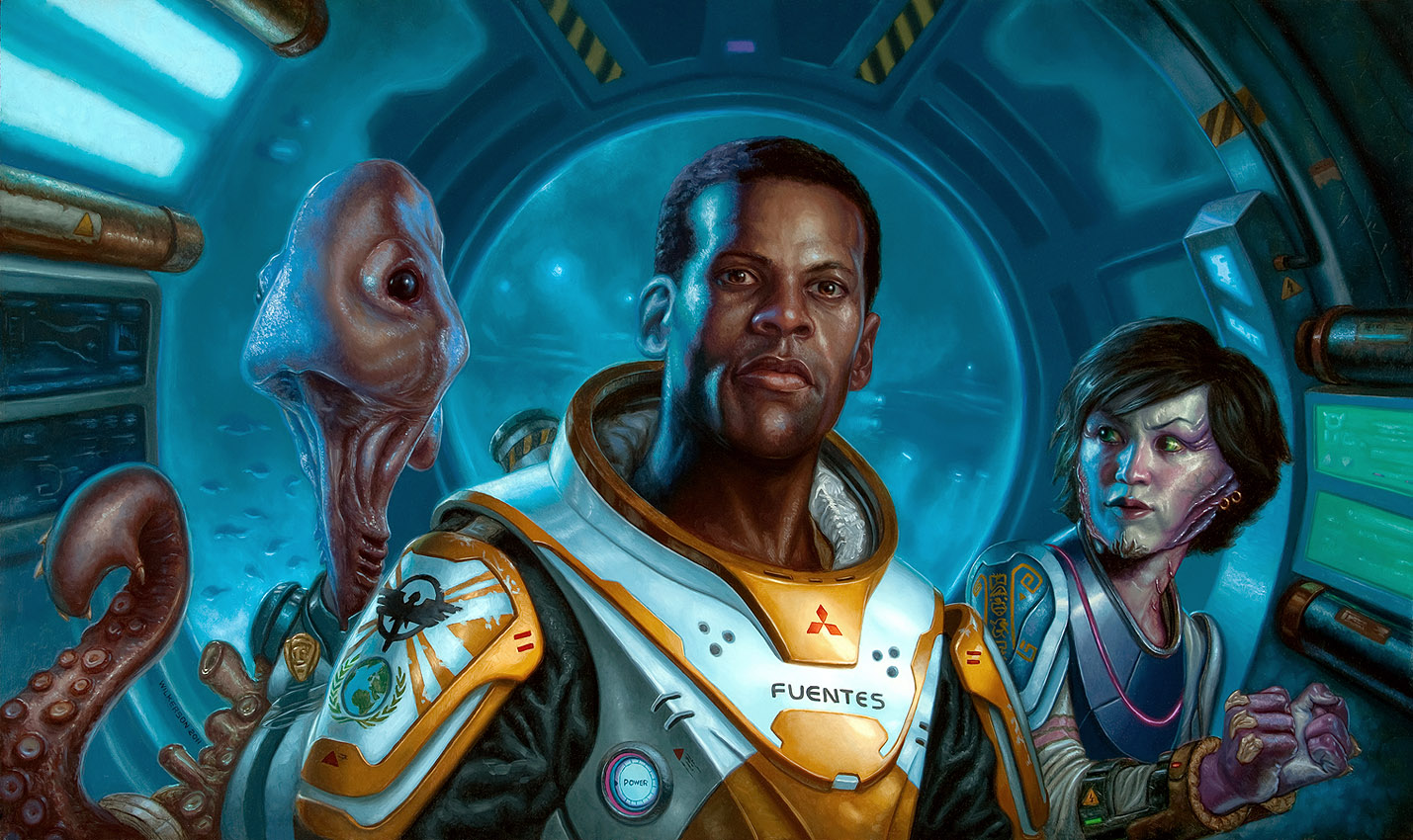
Afrofuturism: Reimagining the Past, Present, and Future


“In Afrofuturism is an exploration and methodology of liberation, simultaneously both a location and a journey.” ~D. Denenge Akpem ”


So what is Afro-Futurism? Music critic and writer Mark Dery (1994) coined the term to describe the self-conscious appropriation of technological themes in Black popular culture, particularly in rap and other hip-hop modalities. The term is more than just being “weird” or following different trends, but it is, as sociologist Alondra Nelson says, “to explore futurist themes in Black cultural production and the ways in which technological innovation is changing the face of Black art and culture” (Nelson & Miller, 2006). The appropriation of science and technology by marginalized groups (Eglash & Bleecker, 2001). As a whole, Afrofuturism is a free space that allows the option to explore, imagine, and discover Blackness tangent to science and technology. Afrofuturism, much like cyberfeminism, uses science fiction and cyber culture in a speculative manner to escape the traditional definitions of what it means to be Black or African (in exotic terms) within western culture (Bristow, 2012).
This week at Loyola Marymount University in Los Angeles, I had the opportunity to take part in a 2-day colloquium called “AstroBlackness: Remaking and [Re]Mixing Black Identity Before, Now, and Beyond.” During this colloquium writers, artists, filmmakers, and scholars worldwide are coming together to discuss Afrofuturism from various angles. The colloquium serves as a “space” where the intellectual, creative, literary and even visual expressions of “the black experience” are examined through the prism of Afrofuturism, in a manner that is both abstract and plausible and no longer dominated by monolithic tropes perpetually tied to an urban landscape or exclusively earthbound. The first day's topics and panels included The Black Imagination: Issues and Ideas of Afrofuturism as an Aesthetic; Science Fiction and Race; and Comic Books, Graphic Novels, Animation, and Afrofuturism.

In particular during the panel discussion on “Science Fiction and Race” many of the panelists such as Fantasy and Science Fiction writer Nnedi Okorafor would explain the many difficulties in maintaining the culture and race of their characters [i], while not allowing the narratives or characters be conscripted to “whitewashed” storylines. One question that would spark a huge debate from the panel and the audience dealt with whether or not Afrofuturism should be inclusive of everything that is outside of the box that is black and is sci-fi related. Some scholars such as University of California-Riverside’s Sherryl Vint felt that as a whole critics spend way too much time policing the boundaries of science-fiction, and not allowing it to be a free flowing entity. From its inception Afrofuturism and Science Fiction are genres that have always been unapologetically ‘outside the box’, but yet so many want to prescribe it to a particular formula. As Professor Reynaldo Anderson of Harris Stowe State University mentioned, “Afrofuturism, Science Fiction, Fantasy, and the Speculative [are] all about bending racial categories and rethinking these genres as forms of resistance.” Each of them serve as another transportation mode to a particular space, which allows for this creative resurgence of [astro]blackness on futuristic terms.

As for Day Two, topics from will range from Critical Literature and Radical Race in Science Fiction, to Gender and Race conversations and issues dealing with the Black Imagination and Science Fiction, and finally “The Future of the Afrofuture”. All in all, Afrofuturism continues to serve as this intersection between imagination, technology, the future, and liberation (Womack, 2013). As a genre it not only allows, but also encourages, individuals to unashamedly experiment, re-imagine identities, and activate this sense of liberation (LaFleur, 2011). Using these various avenues mentioned above, Afrofuturism continues to redefine Black culture and notions of Blackness for today and the future.
—————–
[i] Several creators and authors at the colloquium spoke about having to change the race of their characters, lightening their complexion, or adding non-black characters (i.e. white males), because the “higher ups” feel that audiences will not understand, it’s too political, or because it is so-called not marketable.  


References
  1. Bristow, T. (2012). We want the funk: What is Afrofuturism to the situation of digital arts in Africa? Technoetic Arts: A Journal of Speculative Research10(1), 25-32.
  2. Dery, M. (1994). “Black to the Future”. In Flame wars: The discourse of cyberculture. Durham, NC: Duke University Press.
  3. Eglash, R., & Bleecker, J. (2001). The race for cyberspace: Information technology in the black diaspora. Science as Culture10(3), 353-374.
  4. Nelson, A., & Miller, P. D. (2006, June 28). “About Afrofuturism”: Afrofuturism. Retrieved from http://www.afrofuturism.net/text/about.html
  5. Womack, Y. L. (2013). Afrofurturism: The World of Black Sci-Fi and Fantasy Culture. Chicago: Lawrence Hill Books.

Thursday, January 30, 2014

TV Review: Almost Human (2013-14)

Set in Los Angeles in a not so distant future…2048, human cops and androids team up to protect you on Fox Network’s newest shows: Almost Human*.

Stylized as ΛLMOST HUMΛN, this American science fiction/crime drama series was created by J.H. Wyman (Fringe) for Bad Robot Productions and Warner Bros. Television. Wyman along with Bryan Burk (Super 8, Person of Interest, Fringe) and J.J. Abrams (Star Trek and Mission Impossible film franchises, plus Lost and Fringe) serve as executive producers. The series stars Karl Urban (Star Trek, Dredd) and Michael Ealy (Think Like a Man, Barbershop) in the lead roles, with Minka Kelly (Friday Night Lights), Mackenzie Crook (Pirates of the Caribbean film series), Michael Irby (The Unit), and Lili Taylor (Six Feet Under) as part of the supporting cast.

Picture a modern, futuristic world where police officers are in a losing battle against foreign, outside forces. The department begins to brainstorm creative ways to improve; and one method that is implemented is the use of robotic and/or android partners. In this particular series we follow the return of detective John Kennex, who intended to be teamed up with the latest android model, MX-43, capable of spewing infinite amounts of knowledge like a computer and lacking the emotional elements that destabilize previous, discontinued robots. However, since the department is “fresh out” of MX-43s, Kennex has been partnered (allegedly temporarily) with an older, discontinued model. This particular android’s name is Dorian (Michael Ealy) and his line was discontinued predominantly because they were manufactured to be “almost too human” – with feelings, moods, opinions, etc. This glitch is thought to be a flaw in the field, hence its elimination in later models.

As the show progresses we witness the slow cultivation of friendship between Kennex and Dorian. However, some slight concerns that arise in Kennex and Dorian’s relationship; the android subtly plays into the trope of the “magical negro,”(1) aiding the white cop in finding himself. Nonetheless, Urban and Ealy do have good chemistry that highlights their strong character interplay. I mark this as one of the show’s strengths, in addition to the overall cast’s acting and originality of the show. Both Urban and Ealy (via their characters) bring a degree of seriousness, wit and humor that allows them to both shine and be well-rounded characters and not one-dimensional. In addition, the “buddy cop” dynamic works well in this series, as both main characters are appealing and relatable.

Now, even though Almost Human may be set in the future, it offers a level of sophistication. Far from being a whitewashed version of the Starfleet organization, the show paints a picture of a civilization where technological development begins to outpace ethical considerations, very similar to that fellow FOX show Fringe. After watching just the first two episodes, viewers begin to realize that the title “Almost Human” is more than just a name but an overarching theme. For example, Karl Urban’s character, Detective Kennex, has a synthetic leg, and his partner is an android, a model that was discontinued because of a tendency to have human-like emotional outbursts. Since Dorian has been [supposedly] temporarily paired with Detective Kennex, this opens up various questions/discussions ranging from:
·      Will Dorian ever be accepted as an equal (human)?
·      What makes a person choose to become a police officer?
·      The idea of never really being a part of a stable family and/or relationship

Neither completely man nor machine, both characters feel like outsiders to the status quo. Furthermore, with these elements this makes Almost Human work as a promising and successful television series. It is also clear that creator and producer Wyman has been influenced and schooled in the style of J.J. Abrams as his narrative seems to provide a real sense of a mythological backstory to the Kennex character and the wider world. It also helps that the series functions as a weekly procedural thus quelling viewers’ fears of committing to an ongoing episodic narrative.  

In this first season, the episodes step away from the contrived television methods and offer a blended mix of storytelling methods, sci-fi action, and humor. If viewers simply looked at the ads, it would come off as a clichéd, stylized action drama, but it is so much more. Interestingly enough, the execution of the series is fresh and innovative as it further explores what will potentially happen in the real-life future along with further complicating human and alien dynamics. Additionally, Almost Human is an clever and thought-provoking series that within its storyline, provokes a variety of questions such as:
            ·      Can/will humans and androids be able to co-exist in society?
            ·      What does it mean to be “almost human” and what is this category’s relationship to race and the         alien/outsider/other concept?
            ·      How do we contend with the moral issues regarding technology potentially becoming “too” powerful?
These are all questions and issues that really do not have easy answers, however the journey to explore them is an electrifying ride for those willing to embark upon it. Also the fact that the series has a high production value is an extra boost.

All in all, it is not as if we need another sci-fi action/crime show on television, however Almost Human is an entertaining show with enough entertainment to keep viewers coming back for future episodes. One of its standout features is that it has a simple premise… ”Fighting crime with high technology.” With that said Almost Human is one of the few shows that has managed to grab my attention within the first few episodes of the just first season. One can only hope that the show will continue to engage and hold our interest. Only time will tell. 

When one really thinks about, it is noteworthy that Fox Network (of all networks) committed to such a well-written and produced show such as Almost Human considering past Federal Communications Commission (FCC) woes and the indecency controversy that surrounds the network (2). As a whole, Almost Human offers a healthy balance humor, drama, and a running commentary on human mortality and social identity that hopefully will push the network to renew for another season.

*Catch Almost Human on Mondays at 8 p.m. on Fox


(1) The Magical Negro is a supporting stock character in American cinema, literature, and/or television who is portrayed as coming to the aid of a film’s white protagonists. These characters, which often possess special insight or mystical powers, have been a long tradition in American fiction He has no past; he simply appears one day to help the white protagonist. He is patient and wise, often dispensing various words of wisdom, and is “closer to the earth.” The magical negro will also do almost anything, including sacrificing himself, to save the white protagonist (Christopher, 2000; Okorafor, 2004; Colombe, 2002; Persons, 2005)  
 
(2) While Fox Network itself does not carry any national, regularly scheduled news programming other than Fox News Sunday, both this program and the network’s breaking news coverage are produced by the Fox News Channel, which are regular subjects of controversy. The network has also received some criticism for deciding not to carry scheduled news events (i.e. presidential speeches at times in primetime in order to air regular entertainment programming (such as a speech in September 2009 which would have jeopardized the long-promoted fall premiere of Glee had it aired). Also on various occasions Fox Network has been fined and taken to the U.S. SecondCircuit Court of Appeals for obscene language and content. In addition, The Parents Television Council has regularly criticized Fox Network for shows that they have perceived as indecent content (i.e. The Simpsons, American Dad!, Family Guy, Prison Break, etc.) 

Friday, November 22, 2013

"The Best Man Holiday"...Grab the Tissue...

Prepare to break out the tissue for this one, because the floodgates of tears will soon follow…

It has been 15 years since The Best Man (1999) debuted on the Hollywood screen, and the reunion could not have been any sweeter. The Best Man Holiday comes at a great time to prepare for the upcoming holiday season. 

So just in case you have not seen the first movie or it’s been a little while, here is a quick, updated primer. The whole cast from The Best Man returns and are doing pretty well for themselves in their respective lives and careers. The only new editions are the children and a new flame/significant other. Harper (Taye Diggs) is an author and former teacher at NYU; his wife Robyn (Sanaa Lathan) has gone from being a budding caterer to a full-time Chef; Harper’s best friend Lance (Morris Chestnut) is playing professional football in the NFL and is on the brink of retirement; his wife Mia (Monica Calhoun) is a housewife; then there is Jordan (Nia Long) who has moved through the corporate ranks of BET and now works for MSNBC as an executive producer; her new boyfriend Brian (Eddie Cibrian), one of the new additions to the cast, is a top business man who works on Wall Street; then there is Julian aka Murch (Harold Perrineau) who has become one of the leading innovators in education and runs his own school with the assistance of his wife Candace (Regina Hall); and the final two Shelby (Melissa De Sousa) has now become a reality TV star, and Quentin (Terrence Howard) who has added some stability to life now owns a managing firm. Even though time has passed and life changes have taken place there are still some secrets that have remained and others that have surfaced. As the saying goes…“some things just never change”.

The Best Man Holiday is one of those sequels that could have failed tremendously, but it somehow manages to successfully get past the sophomore curse. Keeping in mind it is rare that a sequel can get a whole cast to return when more than a decade has passed. Truthfully I think, when it comes to original movies and not ones centered off someone who was alive, this definitely makes the list as an excellent film featuring a Black majority cast in a while. One of the highlights of this movie is that it definitely lives up to being a comedy-drama. A large amount of the humor comes from the cast cracking jokes on each other, in some ways a love-hate type vibe, it just seems like it’s a part of their various relationships and friendships.


The film should also be recognized for its non-comedic performances. Keep in mind, if you have not seen the original, there is a lot of already existing drama that has taken place: characters have dated each other, had sex with each other, or liked each other, in the group. As a result of this, there is a lot of existing and lingering chemistry between characters thus their history causes friction. Nevertheless, naturally there seems to be one thing, which brings them together and bond like a family. Unfortunately this one thing may bring on the tears, which might make the viewer a little cheerful for the specific comic relief between Shelby and Quentin. Needless to say, the writing and performances will positively test your sense of empathy.

Now although the film is, overall, beautifully captured, there are a few issues. For example, (without giving any spoilers) Harper and Lance's relationship is somewhat forced and less natural, in comparison to other relationships from characters in the film. And the situation once it is brought to the light, which causes conflict between the two, after it is resolved, is certainly sort of obligatory and slightly annoying. Needless to say it does help push the story along. Another issue could be seen in Lance’s character; to a degree he portrays a Tyler Perry-style faith in Christianity, which might be overbearing at times. Even with these minor problems, The Best Man Holiday still does not disappoint. If nothing else the film has definitely kept up with the times as one reporter from The Washington Post said it clearly delivers in that with one plot point “it is able to revolve around social media run amok, off-handedly invoking everyone from the current president Barack Obama to MSNBC star commentator Melissa Harris-Perry, to T.V. sensation Olivia Pope and to ‘Blurred Lines’ singer Robin Thicke."


So, I remind you again, be ready to laugh and cry all in one sitting, because the dramatic moments are so touching it will truly leave an emotional weight on you. Know that you will laugh and cry, and laugh and cry some more. All in all, this film will undeniably make you appreciate life, family, and friends. On a final note, The Best Man Holiday succeeds in presenting new directions and viewpoints for Black actors. It's difficult to find representations of Black Love in pop culture that are not ratchet, oversexed, or overly comedic. Well, The Best Man Holiday provides a refreshing alternative.


Thursday, October 24, 2013

12 Years a Slave (2013)

It’s that time of the year–films are making their debut in enough time to be recognized by the Academy. Just recently I caught a screening of the much-anticipated 12 Years a Slave. After watching all the trailers, listening to the interviews, and reading various commentaries leading up to the premiere, there was certain expectation that this film wanted to make a strong purposeful statement. I would be very surprised if this film and several of the actors/actresses are not nominated for various Academy awards.

12 Years a Slave is British-American historical drama (and a fictionalized adaptation of the 1853 autobiography “Twelve Years a Slave”) based on the life of Solomon Northup (played by Chiwetel Ejiofor). Northup is a free black man living in New York, who is abducted and sold into slavery in Louisiana. British director Steve McQueen takes on the task of adapting Solomon Northup’s text to the Hollywood screen. After watching, one might come to the conclusion that McQueen and screenwriter John Ridley have created a film that does not include any cinematic illusions or stunts, no reduced takes on a side story or characters, no time filling scenes–just a genuine film production.

Having seen other films by McQueen (i.e. Hunger and Shame), there was a certain expectation regarding his director style and delivery. In this film, he tackles a heavily controversial matter, slavery, in a certain unapologetic way. Scenes of brutal and unflinching violence, moments of tension, loss, grueling anguish (which will be difficult to watch), hope and survival make this somewhat of a dark fairy tale film. Through a healthy dose of solid acting, direction, cinematography, editing, sound design, and art design, Twelve Years provides the viewer with a beautifully and carefully crafted story that is, without a doubt, evocative. Although there have been several recent films which discuss the overarching theme of slavery (Amistad, Django Unchained, Glory, and even Lincoln) McQueen’s 12 Years interpretation provides not just historical content but a combination of solid performances from the cast, focused direction, and creative storytelling.

I would be remiss not to highlight some of the key actors/actresses and their performances in the film. You will definitely want to pay close attention to three characters in the film. British-Nigerian actor Chiwetel Ejiofor provides a stunning presentation of the protagonist Northup. Over time I have grown to admire his work as an actor, and it is clearly evident in this performance. His sense of urgency, anxiety, and drive to reconnect with his family is emotionally flawless. Even in his small nuances he is able to shine bright and make the role even more believable. Then there is the “cruel, villainous” plantation owner Edwin Epps (played by McQueen’s buddy, Michael Fassbender, their third filmic collaboration). He easily nails this role, manifesting much delight in punishing his “property”; in this role Fassbender matches even surpasses Leonardo DiCaprio and his portrayal of Calvin Candie in Tarantino’s Django Unchained. And finally, there is the performance of rising star Lupita Nyong’o who plays Patsey another slave on the Epps plantation. In many ways, her riveting and captivating performance comes very close to borrowing, maybe even stealing, the spotlight from Ejiofor. Nyong’o exhibits true passion through her role; heartache, tears, and anger are the basic elements and the core of her character. With this role we can see a star being born in newcomer Nyong’o.

Considering the social and economic significance of slavery in America’s history, there has been a dearth of serious films that have depicted the daily life and experiences of enslaved and indentured servants to date. This is remarkable considering that the echo of this institution continues to sound through America’s economic culture (as well as abroad). However, in the 134 minutes of playing time 12 Years a Slave provides an important universal lesson regarding the tragedy of inhumane treatment towards man.

Overall, 12 Years a Slave is a powerful, gripping film that is worthy of your attention. It should also be noted that this is not a film for amateurs, as it will bring out a plethora of emotions from every direction. Steve McQueen presents a dark and raw story that exposes everything without having to sugarcoat it. When it is all said and done, you must be prepared to take the courageous (yet necessary) ride of watching a brutal and graphic film that will challenge your thoughts, numb your soul, and provide a clear picture of what it means to fight for one’s freedom.
Rating: 8.5 out of 10

Thursday, August 29, 2013

MUST SEE DOC: A Cultural Experience Shared Globally..."The Fade: A Clean Cut Documentary"

"3 Continents, 4 Barbers, 1 Cut - The Fade. It is more than just a haircut."

I am definitely all about a great documentary that can not only educate, but inspire and entertain the viewer all at the same time. So often people feel that documentaries are just boring films that talk about nature, some foreign technology, or a business venture that you have no clue how it can even work for you. Well today while doing my normal browsing of the net I stumbled upon a trailer that immediately caught my attention.

The barbershop has been a place of solace for many, a place for men (in particular) to get their daily news and gossip, and for young boys a place deemed essential as a part of the coming of age process. For many men and women a good haircut is also necessary to one's physical make up. That one haircut can transform you from the "Average Joe to the The Man!!"

Directed by Andy Mundy-Castle (Giving up the Weed, David is Dying) along with Big Bright Films The Fade: A Clean Cut Documentary is an up close and personal feature documentary that explores how "the Fade" is simply more than just a haircut. The Fade... is a film that presents an exclusive look into four barbers (which include Johnny "Cakes" Castellanos, Shawn Powis, Faisal, and Offori 'Tupac' Mensah) lives who are responsible for the images of some of the worlds major icons (i.e. Jay-Z, Elephant Man, Adrian Lester and others).

As a whole, this film provides a smooth and harmonious journey from Accra to London to New Jersey to Kingston paralleling prevalent themes of masculinity, identity, business, and culture. With only time and space separating these barbers, The Fade... aimlessly demonstrates the power of a mobile enterprise that produces many different individual goals and aspirations within distinct and diverse communities.


Sidenote: Now if you happen to be in London on next month (September 8th), the film will be screened at the British Urban Film Festival in the Genesis Cinema.

When it is all said and done...It's nothing like seeing a brotha with a fresh fade...."oooooo weeee so fresh and so clean!"


G-Breezy's Favorite Movies

  • Bourne Identity/Supremacy/Ultimatum
  • Die Hard series
  • Do the Right Thing
  • Fracture
  • Idlewild
  • Imitation of Life
  • Inside Man
  • James Bond series
  • Love Jones
  • Malcolm X