Need that quick movie review fix before heading to the theater... Wanna know what's going on in Hollywood Cinema... Wandering what is about to hit in theaters and what DVD's are set to hit the shelves... Well Black Savant Cinema (BSC) is just what you need!! A sneak peek into the cinematic world of movies!! Enjoy the ride!!
Showing posts with label Sci-Fi. Show all posts
Monday, June 2, 2014
BREAKING NEWS: Two More Names have been added to the Star Wars: Episode VII cast!!
This just announced today, 12 Years a Slave Oscar winner Lupita Nyong'o and Game of Thrones actress Gwendoline Christie have been casted in the upcoming Star Wars: Episode VII film.
Nyong'o, 31, who made her break-through, award-winning performance in 12 Years... last year as Patsey, is now stepping into the outer space realm. Christie also adds another compelling piece to the casting puzzle, considering all the buzz she is getting from her performance as Brienne in the Game of Thrones series. Both women are bold additions to this already remarkable cast. According to Lucasfilm president Kathleen Kennedy, "I could not be more excited about Lupita and Gwendoline joining the cast of Episode VII, it's thrilling to see this extraordinarily talented ensemble taking shape.
They will be joining original cast members Harrison Ford, Carrie Fisher, Mark Hamill, Kenny Baker (R2-D2), Peter Mayhew (Chewbacca), and Anthony Daniels (C-3PO). Other new additions that have already been cast in the upcoming film include, John Boyega (Attack the Block), newcomer Daisy Ridley, Adam Driver (Girls), Oscar Isaac (Inside Llewyn Davis), Andy Serkis (The Hobbit), Domhnall Gleeson (About Time), and Max von Sydow (The Exorcist). The film is being produced by Kathleen Kennedy and veteran director J.J. Abrams. It is set to hit theaters December 18th, 2015.
No assignment of roles have been mentioned or made, but considering the cadre of actors that have been enlisted it looks like they will not disappoint...hopefully.
Thursday, April 3, 2014
New Documentary Alert: “Invisible Universe: A History of Blackness in Speculative Fiction”
Utopian Fiction…What is,
“Speculative Fiction?”…Who is part of the Science Fiction world?...What does it
mean to be a “Second Class Citizen”?…A voyage into a fantastical world…
To
answer some of those questions and expound on the above ideas, filmmaker and
producer M. Asli Dukan’s has launched her documentary “Invisible Universe: A
History of Blackness in Speculative Fiction” which investigates the
relationships between the Black body, popular fantasy, horror, science fiction
literature & film and the alternative perspectives produced by creators of
color. According to Dukan:
From the origins of the genres,
images of Black people in fantasy, horror and science fiction or speculative
fiction (SF) have been inauthentic at best in the imaginations of white
creators. From the “Fantastic Voyages” of the 1700s where Black pirates
kidnapped white explorers to far off “alien” lands, to technologically advanced
futures where Black people didn’t exist in any significant population, to
post-nuclear holocaust America where modern Blacks took on aggressive
pre-civilized behaviors, many of these ideas have created lasting impressions
in the minds of their audiences and future creators. And though there were a
few attempts by some white writers to use the genres for social commentary, for
instance on race relations, these efforts were few and far in between.
This 10-year project brings these ideas to life through extensive footage, which features interviews with major writers, scholars, artists and filmmakers (i.e. Samuel R. Delaney, LA Banks, Tananarive Due, Nichelle Nichols, Wesley Snipes). The documentary also explores various mediums such as comics, literature, film, and television by deconstructing stereotypical and archetypal images of people of color (primarily Black) within these genres. Dukan has traveled across the country documenting key conferences, conventions, panels, performances and other events of Black SF at The Studio Museum in Harlem in New York, The East Coast Black Age of Comics Convention and The Afrofuturist Affair in Philadelphia, the AstroBlackness colloquium in Los Angeles, the Auburn Avenue Research Library on African American Culture in Atlanta, The Central District Forum for Arts and Ideas in Seattle, and New York Comic Con and Comic-Con International in San Diego. Essentially, “Invisible Universe” ultimately uncovers how Black and other individuals of color have been minimized and even erased within “popular” Sci-Fi culture, thus as a result of this consciously creating their own universe.
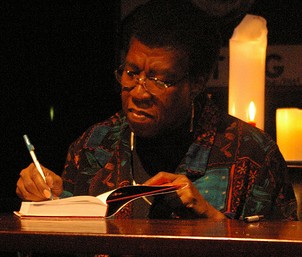
Dukan explains much of her dedication and efforts for this highly anticipated documentary project with a few words from the late, great Black science fiction writer Octavia Butler, “ I was trying to write myself in.” And Dukan does just that with “The Invisible Universe” documentary.
So if you
would like to learn more and support the campaign check out the link HERE .
Check out the trailer here:
As posted in The Berkeley Graduate
Thursday, January 30, 2014
TV Review: Almost Human (2013-14)
Set
in Los Angeles in a not so distant future…2048, human cops and androids
team up to protect you on Fox Network’s newest shows: Almost Human*.
Stylized as ΛLMOST HUMΛN, this American science fiction/crime drama series was created by J.H. Wyman (Fringe) for Bad Robot Productions and Warner Bros. Television. Wyman along with Bryan Burk (Super 8, Person of Interest, Fringe) and J.J. Abrams (Star Trek and Mission Impossible film franchises, plus Lost and Fringe) serve as executive producers. The series stars Karl Urban (Star Trek, Dredd) and Michael Ealy (Think Like a Man, Barbershop) in the lead roles, with Minka Kelly (Friday Night Lights), Mackenzie Crook (Pirates of the Caribbean film series), Michael Irby (The Unit), and Lili Taylor (Six Feet Under) as part of the supporting cast.
Picture a modern, futuristic world where police officers are in a losing battle against foreign, outside forces. The department begins to brainstorm creative ways to improve; and one method that is implemented is the use of robotic and/or android partners. In this particular series we follow the return of detective John Kennex, who intended to be teamed up with the latest android model, MX-43, capable of spewing infinite amounts of knowledge like a computer and lacking the emotional elements that destabilize previous, discontinued robots. However, since the department is “fresh out” of MX-43s, Kennex has been partnered (allegedly temporarily) with an older, discontinued model. This particular android’s name is Dorian (Michael Ealy) and his line was discontinued predominantly because they were manufactured to be “almost too human” – with feelings, moods, opinions, etc. This glitch is thought to be a flaw in the field, hence its elimination in later models.
As the show progresses we witness the slow cultivation of friendship between Kennex and Dorian. However, some slight concerns that arise in Kennex and Dorian’s relationship; the android subtly plays into the trope of the “magical negro,”(1) aiding the white cop in finding himself. Nonetheless, Urban and Ealy do have good chemistry that highlights their strong character interplay. I mark this as one of the show’s strengths, in addition to the overall cast’s acting and originality of the show. Both Urban and Ealy (via their characters) bring a degree of seriousness, wit and humor that allows them to both shine and be well-rounded characters and not one-dimensional. In addition, the “buddy cop” dynamic works well in this series, as both main characters are appealing and relatable.
Now, even though Almost Human may be set in the future, it offers a level of sophistication. Far from being a whitewashed version of the Starfleet organization, the show paints a picture of a civilization where technological development begins to outpace ethical considerations, very similar to that fellow FOX show Fringe. After watching just the first two episodes, viewers begin to realize that the title “Almost Human” is more than just a name but an overarching theme. For example, Karl Urban’s character, Detective Kennex, has a synthetic leg, and his partner is an android, a model that was discontinued because of a tendency to have human-like emotional outbursts. Since Dorian has been [supposedly] temporarily paired with Detective Kennex, this opens up various questions/discussions ranging from:
· Will Dorian ever be accepted as an equal (human)?
· What makes a person choose to become a police officer?
· The idea of never really being a part of a stable family and/or relationship
Neither completely man nor machine, both characters feel like outsiders to the status quo. Furthermore, with these elements this makes Almost Human work as a promising and successful television series. It is also clear that creator and producer Wyman has been influenced and schooled in the style of J.J. Abrams as his narrative seems to provide a real sense of a mythological backstory to the Kennex character and the wider world. It also helps that the series functions as a weekly procedural thus quelling viewers’ fears of committing to an ongoing episodic narrative.
In this first season, the episodes step away from the contrived television methods and offer a blended mix of storytelling methods, sci-fi action, and humor. If viewers simply looked at the ads, it would come off as a clichéd, stylized action drama, but it is so much more. Interestingly enough, the execution of the series is fresh and innovative as it further explores what will potentially happen in the real-life future along with further complicating human and alien dynamics. Additionally, Almost Human is an clever and thought-provoking series that within its storyline, provokes a variety of questions such as:
· Can/will humans and androids be able to co-exist in society?
· What does it mean to be “almost human” and what is this category’s relationship to race and the alien/outsider/other concept?
· How do we contend with the moral issues regarding technology potentially becoming “too” powerful?
These are all questions and issues that really do not have easy answers, however the journey to explore them is an electrifying ride for those willing to embark upon it. Also the fact that the series has a high production value is an extra boost.
All in all, it is not as if we need another sci-fi action/crime show on television, however Almost Human is an entertaining show with enough entertainment to keep viewers coming back for future episodes. One of its standout features is that it has a simple premise… ”Fighting crime with high technology.” With that said Almost Human is one of the few shows that has managed to grab my attention within the first few episodes of the just first season. One can only hope that the show will continue to engage and hold our interest. Only time will tell.
When one really thinks about, it is noteworthy that Fox Network (of all networks) committed to such a well-written and produced show such as Almost Human considering past Federal Communications Commission (FCC) woes and the indecency controversy that surrounds the network (2). As a whole, Almost Human offers a healthy balance humor, drama, and a running commentary on human mortality and social identity that hopefully will push the network to renew for another season.
*Catch Almost Human on Mondays at 8 p.m. on Fox
Stylized as ΛLMOST HUMΛN, this American science fiction/crime drama series was created by J.H. Wyman (Fringe) for Bad Robot Productions and Warner Bros. Television. Wyman along with Bryan Burk (Super 8, Person of Interest, Fringe) and J.J. Abrams (Star Trek and Mission Impossible film franchises, plus Lost and Fringe) serve as executive producers. The series stars Karl Urban (Star Trek, Dredd) and Michael Ealy (Think Like a Man, Barbershop) in the lead roles, with Minka Kelly (Friday Night Lights), Mackenzie Crook (Pirates of the Caribbean film series), Michael Irby (The Unit), and Lili Taylor (Six Feet Under) as part of the supporting cast.
Picture a modern, futuristic world where police officers are in a losing battle against foreign, outside forces. The department begins to brainstorm creative ways to improve; and one method that is implemented is the use of robotic and/or android partners. In this particular series we follow the return of detective John Kennex, who intended to be teamed up with the latest android model, MX-43, capable of spewing infinite amounts of knowledge like a computer and lacking the emotional elements that destabilize previous, discontinued robots. However, since the department is “fresh out” of MX-43s, Kennex has been partnered (allegedly temporarily) with an older, discontinued model. This particular android’s name is Dorian (Michael Ealy) and his line was discontinued predominantly because they were manufactured to be “almost too human” – with feelings, moods, opinions, etc. This glitch is thought to be a flaw in the field, hence its elimination in later models.
As the show progresses we witness the slow cultivation of friendship between Kennex and Dorian. However, some slight concerns that arise in Kennex and Dorian’s relationship; the android subtly plays into the trope of the “magical negro,”(1) aiding the white cop in finding himself. Nonetheless, Urban and Ealy do have good chemistry that highlights their strong character interplay. I mark this as one of the show’s strengths, in addition to the overall cast’s acting and originality of the show. Both Urban and Ealy (via their characters) bring a degree of seriousness, wit and humor that allows them to both shine and be well-rounded characters and not one-dimensional. In addition, the “buddy cop” dynamic works well in this series, as both main characters are appealing and relatable.
Now, even though Almost Human may be set in the future, it offers a level of sophistication. Far from being a whitewashed version of the Starfleet organization, the show paints a picture of a civilization where technological development begins to outpace ethical considerations, very similar to that fellow FOX show Fringe. After watching just the first two episodes, viewers begin to realize that the title “Almost Human” is more than just a name but an overarching theme. For example, Karl Urban’s character, Detective Kennex, has a synthetic leg, and his partner is an android, a model that was discontinued because of a tendency to have human-like emotional outbursts. Since Dorian has been [supposedly] temporarily paired with Detective Kennex, this opens up various questions/discussions ranging from:
· Will Dorian ever be accepted as an equal (human)?
· What makes a person choose to become a police officer?
· The idea of never really being a part of a stable family and/or relationship
Neither completely man nor machine, both characters feel like outsiders to the status quo. Furthermore, with these elements this makes Almost Human work as a promising and successful television series. It is also clear that creator and producer Wyman has been influenced and schooled in the style of J.J. Abrams as his narrative seems to provide a real sense of a mythological backstory to the Kennex character and the wider world. It also helps that the series functions as a weekly procedural thus quelling viewers’ fears of committing to an ongoing episodic narrative.
In this first season, the episodes step away from the contrived television methods and offer a blended mix of storytelling methods, sci-fi action, and humor. If viewers simply looked at the ads, it would come off as a clichéd, stylized action drama, but it is so much more. Interestingly enough, the execution of the series is fresh and innovative as it further explores what will potentially happen in the real-life future along with further complicating human and alien dynamics. Additionally, Almost Human is an clever and thought-provoking series that within its storyline, provokes a variety of questions such as:
· Can/will humans and androids be able to co-exist in society?
· What does it mean to be “almost human” and what is this category’s relationship to race and the alien/outsider/other concept?
· How do we contend with the moral issues regarding technology potentially becoming “too” powerful?
These are all questions and issues that really do not have easy answers, however the journey to explore them is an electrifying ride for those willing to embark upon it. Also the fact that the series has a high production value is an extra boost.
All in all, it is not as if we need another sci-fi action/crime show on television, however Almost Human is an entertaining show with enough entertainment to keep viewers coming back for future episodes. One of its standout features is that it has a simple premise… ”Fighting crime with high technology.” With that said Almost Human is one of the few shows that has managed to grab my attention within the first few episodes of the just first season. One can only hope that the show will continue to engage and hold our interest. Only time will tell.
When one really thinks about, it is noteworthy that Fox Network (of all networks) committed to such a well-written and produced show such as Almost Human considering past Federal Communications Commission (FCC) woes and the indecency controversy that surrounds the network (2). As a whole, Almost Human offers a healthy balance humor, drama, and a running commentary on human mortality and social identity that hopefully will push the network to renew for another season.
*Catch Almost Human on Mondays at 8 p.m. on Fox
(1) The Magical Negro
is a supporting stock character in American cinema, literature, and/or
television who is portrayed as coming to the aid of a film’s white
protagonists. These characters, which often possess special insight or
mystical powers, have been a long tradition in American fiction He has
no past; he simply appears one day to help the white protagonist. He is
patient and wise, often dispensing various words of wisdom, and is
“closer to the earth.” The magical negro will also do almost anything,
including sacrificing himself, to save the white protagonist
(Christopher, 2000; Okorafor, 2004; Colombe, 2002; Persons, 2005)
(2)
While Fox Network itself does not carry any national, regularly
scheduled news programming other than Fox News Sunday, both this program
and the network’s breaking news coverage are produced by the Fox News
Channel, which are regular subjects of controversy. The network has also
received some criticism for deciding not to carry scheduled news events
(i.e. presidential speeches at times in primetime in order to air
regular entertainment programming (such as a speech in September 2009
which would have jeopardized the long-promoted fall premiere of Glee had it aired). Also on various occasions Fox Network has been fined and taken to the U.S. SecondCircuit
Court of Appeals for obscene language and content. In addition, The
Parents Television Council has regularly criticized Fox Network for
shows that they have perceived as indecent content (i.e. The Simpsons, American Dad!, Family Guy, Prison Break, etc.)
Monday, August 12, 2013
Elysium: Voyage to Another World
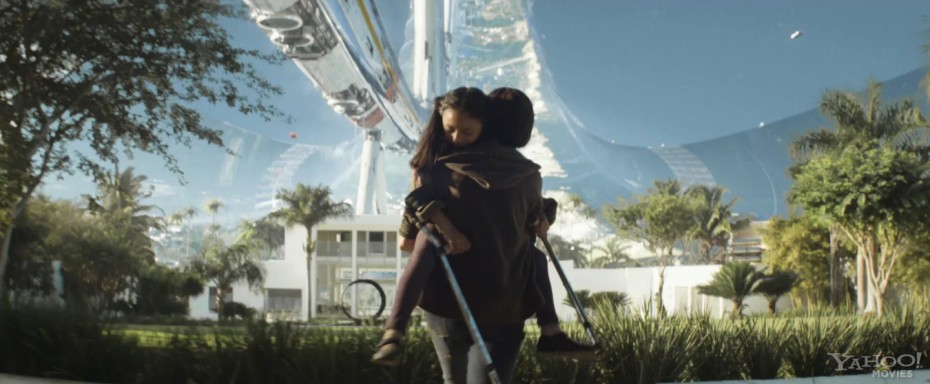
Set in the year 2154, where the very wealthy live on a man-made space station while the rest of the population resides on a ruined Earth; a man takes on a mission that could bring equality to the polarized worlds.
Elysium (starring Matt Damon) is what I would like to call a sci-fi/political thriller, and if you have seen District 9 then you know this is basically a follow-up from that film. Essentially what director Neill Blomkamp is doing with this film stirring up our brains so that we can further question the way society is handling certain issues such as health care, immigration, political and military power, even the cruel treatment of women and children (Just think political Mad Max). I find this to be quite significant and very relevant. I always love a good film that can evoke political messages related to today's society and still entertain, brilliant! (This film does that, but it could have been better.)
Imagine the Earth severeley neglected, violence-ridden, grimy, and slowly falling into despair...that's what Los Angeles looks like in this film set in the future. The rich have everything they need and could possibly want plus more, while the poor suffer to make ends meet and survive to see another day. Sounds very familiar...One begins to understand what it means when they say "art imitates life."Elysium as a film does not introduce anything that we do not already know, however it does remind us what could be if change does not take place from every angle of the spectrum. I appreciate what the film offers, but just like the kids from the ATT commercial..."We want more!!!" Elysium re-ignites the conversation flame, but it just needs that extra push to really take off into space.
Now here is where it gets a little tricky, as much as I appreciated the actors/actresses involved in this film, I feel this is where the film meets its downfall. As a whole, the character development was weak despite the stars who were involved. Of course Matt Damon plays the lead role of Max DeCosta and pretty much delivers on that role, but his role seemed quite predictable and had the potential for more character growth. Then you have Jodie Foster, who plays Secretary Rhodes, who really under performs her role. I understand that she needs to maintain control and power and does not want to appear weak, but it just seemed to lack depth (but maybe that was the intention). Unfortunately, her character is pretty much already revealed from the previews, which is rather disappointing. Once again potential character development that is not to help move the story forward. Now one character that probably only needs minor tweeking is that of Kruger (played by Sharlto Copley). This guy nailed the role of a high-charged, sociopath who has no sympathy or respect for human life. He is the "elephant in the room" that was needed for this film. Kruger was definitely a highlight and may have even stole a little thunder from Max. So one would think with the combination of all these characters it would be a perfect mix....not quite. Although each character had various emotions that impact us in different ways, it seems the impact was short-lived. Just at the moment when you want to hate someone, care for someone, or cry, the feeling is snatched away.
On the flip side, visually the film is actually quite stunning both the parts on Earth and in Elysium. The imagery is quite electrifying from the use of the human-like robots, to the weapons used, to the obvious space station 'Elysium'. In many ways, one might want to escape to another world, just to breathe new air (literally). In addition to the visual, there was actually an element that may have been a flaw, but it seemed to work for the film. On some occasions during the film there were moments of shakiness, which kind of added to the gritty, ruggedness of futuristic, poverty-stricken LA. Whereas the shots in Elysium were almost picture-perfect and crystal clear. There was no doubt that we as the viewer got the opportunity to step into two totally different worlds, but still had a relationship with the other. Obviously there was a sizable budget involved and they used every penny strategically.
I must admit though, Elysium cleverly used science fiction to present the symbolism between past Reaganomics to today's Tea Party. There is no denying that immigration is definitely a current issue and probably will remain so, unless drastic measures are taken and recognized. And it was quite evident from the past election that the 1% want to make sure that you are reminded of their paradise lifestyle and how if you "don't got it" then you do not belong. Elysium also reminds us of the unsafe working conditions that many individuals face daily on their jobs, and how this can lead to terminal sickness or even worse death. It would also refresh my memory regarding all the many issues surrounding medical/health care. Even with this movie touching upon all these provocative, sensitive topics (issues), the could have been strengthen with more character development versus just action...action. In some cases, action can be a good thing. However, I think this was the type of movie that really could have been even greater if the characters would be able to bridge the gap a little more with the issues addressed in the film.
Overall, Elysium provides a film backdrop of what it means to survive in world that is against you, to sacrifice for the greater good, and maintain hope when you just want to give up and fade in the wind.
Rating: 7.5 out of 10
Wednesday, July 17, 2013
Pacific Rim...Man-Machine vs. Beast
With a war between mankind and these monstrous creatures of the sea waging in the mist, a former pilot and his crew suit to save the world from the apocalypse. Using out-of-date special weapons, this crew embarks on a mission to reclaim what is rightfully their own. Director Guillermo del Toro presents a story of survival by any means necessary, even when others have given up in this sci-fi, action thriller.
"Rule #1 - Do Not Touch Me...Rule #2 - Do Not Touch Me!" |
Now visually this movie is clearly showcasing the robots, but we gotta stop and acknowledge the characters behind the machine. First up is the character Marshall Stacker Pentecost (played by Idris Elba) who truly puts his heart and soul into his character. Now officially he may not be deemed as the films main character, but for me I think he can share the role with Charlie Hunnam. Pentecost brings the fatherly/mentor type role to Pacific Rim, as he must take lead of what robots he has left before the world is taken by the apocalypse. As for Hunnam (who plays Raleigh Becket), he offers the idea of what it means to get a second chance. After a tremendous loss in battle, he gets another opportunity to fight the battle, and eventual war, again. In his role as Becket, he genuinely puts his whole self into fighting for the world, considering he came back to fight willingly. On several occasions, he puts all his cards (emotions) on the table, and manages to still come out on top. When it is all said and done, both characters and their roles are a great match for this graphic novel based movie.
As for the supporting cast, there is a nice mix of femininity, calmness, testosterone, aggressiveness, and pure smarts. The first two features describe the Raleigh's co-pilot Mako Mori (Rinko Kikuchi), she provides the element of innocence, but at the same time a fighter. Her character allows the audience to see the true human side of the co-pilots who are running these robots. Also her relationship with Pentecost is quite father-daughter like (this is both unique and interesting considering the two different races). And for our comic relief, we have Dr. Newton Geiszler (Charlie Day) and Gottlieb (Burn Gorman), who serve up the audience with brains, wit, and energy to spare. In their own special way they show when you don't listen to the guy with the shot nerves but serious brain power, things can go awry. These two guys are the definition "Nerdom", and I love it!! Now in the case of Ron Perlman (who plays the role of Hannibal Chau...interesting name for a Jewish guy from Brooklyn) he may have had limited time on the screen, but the time that he did have was effective and refreshing. When you watch the film make sure you catch how he got that name, rather interesting. As a whole, each of the characters give a larger than life performance, so much so that no one person dominates the movie, more than they should considering their role in the film. The total package was presented with each character from beginning to end.
Thankfully, Pacific Rim provides a sufficient backstory to the origins of the Kaijus as well as how the Jaegers work, so that you are not just thrown into the movie wondering who, what, when, and where? In addition, there are various themes that can be seen from watching this film to, which include slight reference to issues of immigration, the father-child relationship, gender and race dynamics, human life, sacrifice, and stepping out of your comfort zone.
Here is a movie that will definitely have its own fans, and probably add some new ones. Pacific Rim can simply be defined as an "extraordinary, self-indulged summer blockbuster." If nothing else this movie is pure entertainment. These shiny, eccentric, colorful, and marvelous robots are a sight to behold. Trust me when I say, it does not require you to think much (unless you are just that type of critical person), there is plenty of action, the CGI is clear and in your face, and it even has a pretty good storyline. For me this movie was like watching Transformers on steroids, but in a good way. All in all, Pacific Rim does not disappoint!!
Rating: 8 out of 10 stars
Friday, January 18, 2013
Black Sci-Fi Craving...
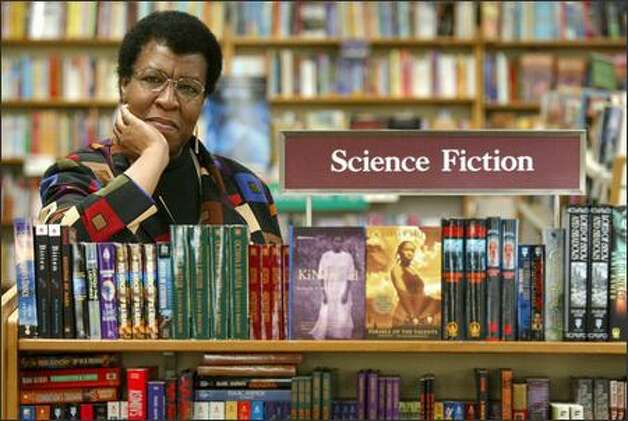
As I was perusing through my library at home I ran across a few books that I remember reading that just really took me into another world. One in particular was that of Octavia Butler's "Wild Seed". This book starting me to thinking... "man it would be real nice to see an all-Black cast in a Black Sci-Film."
Although it would take a special person to tackle any one of Butler's book, but I think I may have stumbled upon something that will satisfy my craving for now. It's a new sci-fi tv/web series called The Abandon. Here is short snippet of what the show is about from writer/director Keith Josef Adkins...
"After a possible alien invasion, five black men discover they may be the last humans on Earth and quickly learn the importance of survival, loyalty, and manhood. The Abandon is inspired by my desire to see black and brown people work in the sci-fi genre. It is inspired by knowing so many black people who deeply love and respect the sci-fi genre and my interest in making them happy."
Oh and there is also a sista who has also survived, too. (YAY!!)
Check out the pilot episode here:
For more information about the series go to The Abandon .
Now I love some sci-fi so this is truly a treat, and not to mention some nice eye candy!! :-)
Thursday, December 13, 2012
Sci-Fi Film Explosion
It appears that Sci-fi flicks are becoming very popular these days in the film industry. British star Idris Elba is set play a role in the new fast-paced sci-fi thriller, Pacific Rim. The film is directed by Guillermo del Toro and set in San Francisco.
Pacific Rim a film set in a world where soldiers piloting giant robots battle against giant monsters who have mysteriously risen from beneath the ocean. The film will be an homage to Japanese giant monster films, known as Kaiju worldwide. according to del Toro the film will be "a beautiful poem to giant monsters."
Adding movies such as this one to his resume are reasons why Idris Elba remains an actor that is constantly on the watch list.
Think of this film as Transformers meets Cloverfield...Pacific Rim is set to hit theaters July 12th, 2013. Another potential box-office hit for the summer!!
Tuesday, August 7, 2012
REPOST: "Freeing (Black) Science Fiction From The Chains Of Race"
While doing my daily reading of Shadow and Act, I came across this very intriguing article discussing sci-fi writer Octavia Butler and possible/potential film adaptations. It was such an engaging article that I just had to do a repost on Black Savant Cinema!! Check it out, and trust me you will not be disappointed!!
By Andre Seewood
By Andre Seewood
Having just finished reading African-American science-fiction author Octavia E. Butler’s short story,” BLOODCHILD,” the temptation to adapt the work for the cinema brings forth a host of complexities within the material that go far beyond the race of the author. Ostensibly, BLOODCHILD is the story of human beings who have left earth, due to rising violence and the threat of enslavement, to share their lives on another planet populated by arthropod-like creatures.
The price for peaceful co-existence between the two species is that selected male humans must be impregnated and bear the children of the aliens in an excruciatingly painful and bloody gestation process. One male child has discovered that for all of his life he has been groomed for impregnation and if he refuses then the lives of his siblings and loved ones will be held in jeopardy.
In the afterword by the author, Butler makes explicit the themes and context of the story. She states that on one level BLOODCHILD can be read as,” a love story between two very different beings,” and that its context is that of,” a coming of age story in which a boy must absorb disturbing information and use it to make a decision that will affect the rest of his life,” and finally she confesses that,” Bloodchild is my pregnant man story.”(1)
Butler’s reason for explicitly detailing the themes and context in her afterword to the short story was driven by a central difficultly in the creation and critique of any science fiction by an African-American author: the certain tendency to see all science fiction by African-Americans as a metaphor or commentary about slavery or racial inequities past and present. As Butler matter-of-factly asserts,” it amazes me that some people have seen “Bloodchild” as a story of slavery. It isn’t.” (2)
Yet this overarching and obsessive need to see all science fiction by African-Americans as a metaphor or commentary on slavery or racial inequities tends to make the question of race a central theme within the work (whether it is actually there or not) to the exclusion of all the other prominent themes as Butler pointed out in her afterword to BLOODCHILD. In placing the racial frame upon the science fiction/fantasy/or futurist work of African-Americans we too hastily discard the genuine scientific, fantasy or futurist aspects of the work, which in turn, weakens and /or perverts the author’s original intent. In fact, many African-Americans use race as a default critique when we approach science-fiction solely as a means of side-stepping the science within the fiction no matter what the race of the author.
For example, many African-American film scholars (Ed Guerrero, Eric Greene, Adilifu Nama), critics and viewers insist upon reading Frank J. Schaffner’s PLANET OF THE APES (1968) as,” a dense racial allegory,” where a white male is,” a signifier of black victimization,“ that obscures the central scientific themes and historical source material of PLANET OF THE APES which were the 1925 Scopes trial, the concept of Darwin’s Theory of Evolution, and the concept of time dilation in space travel.(3)
Although later PLANET OF THE APES sequels did deliberately enhance the racial allegory with the saga, perhaps owing to the financial incentives of the Blaxploitation genre that was growing in popularity at that time, the original PLANET OF THE APES, adapted from French author Pierre Boulle’s 1963 novel by Rod Serling and Michael Wilson, is a stunning exploration of skepticism about the theory of evolution and the fear of knowledge that contradicts established beliefs in the face of mounting empirical evidence from an inverse perspective [that the superior apes are derived from the lowly humans]. These over-racialized readings of PLANET OF THE APES demonstrate how convincingly one can discard the “science” within the fiction to make the subject of race a central theme within any science fiction film or story.
Returning to Octavia E. Butler’s BLOODCHILD, her insistence that BLOODCHILD is not a story of slavery in her afterword is a direct consequence of the over-racializing of the work of African-American science-fiction authors as metaphors or commentaries on slavery or racial inequities. Neither Butler nor her characters in BLOODCHILD ever mention their race within the text. In effect, to see BLOODCHILD as a metaphor about slavery is to deliberately obscure the more profound and disturbing aspects of the work which is of course the notion of male pregnancy and a boy’s coming of age on an alien planet where the adults have made a political accommodation to peacefully co-exist with their alien hosts that has troubling moral, physical and psycho-sexual consequences.
This is the “science” within the fiction that cannot by itself prohibit a racial critique but it certainly reveals how using race as a default critique of science-fiction by African-American authors perverts their themes and chains these authors to the topic of race no matter how much freedom they have within their chosen medium of artistic expression.
For African-American filmmakers the over-racializing of the themes within a science-fiction story (whether an original story or adaptation) is ultimately inhibiting because those scientific, speculative or fantasy aspects that attracted you to the work in the first place can easily become obscured, diluted or discarded as “race” insidiously poisons the well of the fictional context and content. It is a poisoned well that makes us all potentially see the genre of science-fiction,” through a glass darkly,” so to speak. To put the matter plainly, the perceptual frame of racial inequality (past or present) can be applied to any story or film regardless of the author’s central themes; race is a catch-22; a prison house of interpretation from which it seems there is no escape or satisfying resolution.
For example, if you as a filmmaker omit African-Americans from the science-fiction story altogether then the critical concept of “structured absence” allows your critics to use any other non-white race, animal, or object within your film as a symbol of minority otherness and then “interpret” a racial commentary where you had not intended such a commentary to exist. One needs only to read Ed Guerrero’s devastating analysis of Joe Dante’s GREMLINS (1984) and GREMLINS 2: The New Batch (1990) in his book Framing Blackness.(4)
In regards to the absence of African-Americans in the GREMLINS films, Guerrero interprets the Gremlins themselves as symbols of minority otherness and asserts that,” the film’s socially repressed fears have to do with non-white minorities gaining political power, as Gremlins 2, satires the political subtleties of an increasing influential “minority discourse” in contemporary American life more than it plays upon latent anxieties over racial otherness.” (pg.65) Although it could alternately be argued that many White American filmmakers were omitting African-American characters from their science-fiction films in a naïve and erroneous attempt to avoid racial issues and keep those issues from stealing focus from their central themes.
Conversely, if you place African-Americans in lead, co-lead or supporting roles in a science-fiction film, the critics can use the concept of “token presence” to suggest that the actors are performing blackness as a general commentary on race relations (contemporary, historical or speculative) as author Adilifu Nama does with his analysis of Will Smith in Alex Proyas’ I, ROBOT (2004) in his book Black Space. In regards to more African-American actors gaining lead and co-lead roles in science-fiction films, Nama asserts that,” In the wake of September 11th, black representation in the science-fiction films of today may function to assuage an acute case of domestic paranoia.” (pg.40)
So that even with an African-American in the lead role of a science-fiction film the concept of token presence maintains race as a central theme to the exclusion of the “scientific” themes within the film. Idris Elba’s supporting role as the space ship captain in Ridley Scott’s PROMETHEUS (2012) can be viewed as a commentary on race if we are willing to sweep aside and obscure the film’s central themes on the origin of man, inter-planetary bio-warfare, and the old filthy rich miser who desperately wants to cheat death at the expense of the lives of others.
Token presence can also allow us to use Bokeem Woodbine’s supporting role in Len Wiseman’s re-imagining of TOTAL RECALL (2012) as a racial commentary that can obscure the compelling political and psychological themes that are central to the work of celebrated science-fiction author Phillip K. Dick upon which the film is based.
The full title of Nama’s book is revealing of the catch-22 of race: it is called BLACK SPACE: Imagining Race in Science-Fiction film. The title itself begs the question are we “imagining race” in science-fiction film as a means of obscuring the science and other themes that do not support a racial interpretation within the work? As a filmmaker approaching the science-fiction genre with the ambition of casting African-Americans in your film, you will have great difficulty in finding a middle ground between the racialized poles of “structured absence” and “token presence”. It would seem that as it concerns race in the genre of science-fiction, one is damned if you do and damned if you don’t cast an African-American.
“One of the most difficult obstacles African-American writers and filmmakers must face when approaching the genre of science-fiction is whether or not to continue the pessimism of present day racial inequities in their visions of the future or whether or not to project an optimism into their visions of the future where racial inequities have been solved. It is literally a choice between a dystopic future and a utopian future where racial conflicts have either been solved as in a utopia or remain unsolved as in a dystopia.
The most pertinent question that might help in making the choice is: Are blacks treated better, worse or fairly in the future than they are today? This choice is of great importance because if the racial inequities have been solved then the writer/filmmaker must find conflicts within the drama beyond race which given the narrow perceptual frame through which many African-Americans view cinema, might be no easy task.
For example, in director Ridley Scott and writers Dan O’Bannon and Ronald Shusett’s science-fiction film ALIEN (1979), racial inequities were carried forward into the future by the character of African descent named, Parker (Yapet Koto) who held a mechanical engineering job that was on a lower pay scale than the other whites on the interplanetary mining ship, Nostromo. A fact that can be understood from his concern about their bonus pay which he was told would be revoked if they didn’t fulfill their mission directives. Moreover, he was a subordinate in the chain of command to nearly all of the other whites on the ship besides his fellow white co-engineer, Brett (Harry Dean Stanton). Parker’s death at the hands of the violent space creature was made all the more tragic since he was killed in a futile effort to protect a weak and hysterical white female crew member.
By contrast, Brian DePalma’s MISSION TO MARS (2000) projects an optimistic future where racial inequities, it is at least implied, have been solved by the example of the Luke Graham (Don Cheadle) character’s unguarded interaction amongst his white peers and colleagues as well as his command of the first human colony on Mars. It is clear that an optimistic perspective brings the science of the fiction to the forefront and allows the filmmakers and the writers to establish dramatic conflicts through those basic human qualities and frailties that transcend race.” (pgs. 50-51, Slave Cinema)
For African-American filmmakers approaching the genre of science-fiction, whether through an original screenplay or an adaptation, I would suggest that if you carry racial inequities forward into the future of your story context you might still be able to keep race from obscuring the central “scientific” themes of your work if you utilize what I call the development strategy. As I detail in my book, SLAVE CINEMA,” The development strategy usually features an African-American character that is first seen in a minor supporting role, but through successive events and circumstances that reveal his or her cunning, intelligence, sensitivity, wisdom, strength, beauty or empathy this minor supporting role is developed into a lead or co-lead role within the story.
Roland Emmerich’s INDEPENDENCE DAY is one such film that employs the Development strategy concerning the African-American Air Force pilot Capt. Steve Hiller as performed by Will Smith. This character was first seen as a small part of a large multi-racial ensemble cast and the character is developed through the course of the film’s events and circumstances into a hero.” (pg. 70) The Development strategy is particularly effective with integrated casts and with actors who are not well known.
Alternately, if you do not want to carry racial inequities forward into the future of your story context you just simply have to cast an African-American in the lead role and concentrate on the dynamics of the central “scientific” themes within the story. For all intents and purposes once you’ve cast that African-American actor in the lead role or you have decided to use the development strategy to move an African-American character from a supporting role to a lead “heroic” role in a science-fiction film you have already effectively made a powerful and inspiring commentary on race regardless of the story context and theme.
In choosing either path you can “side step” the catch-22 of race and the racial critiques of “structured absence” [no blacks at all] and “token presence” [one black as a commentary upon all blacks] by remaining faithful to those aspects that are specific to the genre you have chosen. In short, you explore the “science” within the fiction instead of obscuring that “science” through a glass darkly with race.
And if seems as if it’s a question of money that is keeping African-American filmmakers from breaking out into the genre of science-fiction then we should take inspiration from the fact that many of the great science-fiction films of cinema history have been made with budgets far less than one would expect. Consider films like La Jetée (1962) by Chris Marker, Alphaville (1965) by Jean-luc Godard, THX 1138 (1971) by George Lucas, The Man Who Fell To Earth (1976) by Nicholas Roeg, Stalker (1979) by Andrei Tarkovsky, The Last Battle (1983) by Luc Besson, The Brother From Another Planet (1984) by John Sayles, and They Live (1988) by John Carpenter; these were films all made by filmmakers who manipulated the formal structure and sound design of their films rather than high production budgets and expensive Computer Generated Imagery.(5)
Even Ridley Scott’s Bladerunner (1982) saved money by recycling sets and miniature models from George Lucas’ Star Wars (1977) as well as utilizing cost saving measures like matte paintings and blue screen processing.(6)
Creativity and imagination can always trump a high budget and lack of originality every time in the cinema.
Knowing that there are many African-American scientists, physicists, explorers, engineers and astronauts that live and breathe in the world today as they did once throughout history (I am reminded of the great Lonnie George Johnson the inventor (SuperSoaker) and engineer and Valerie Thomas the scientist and inventor of NASA’s the illusion transmitter) we should guide ourselves through the genre of science-fiction with the notion that our “afro-nautical” characters are exceptions that prove the entire notion of black inferiority untrue by their very existence. Therefore, we can concentrate on those scientific, fantasy, or speculative aspects of the genre that we enjoy without guilt, remorse or trepidation.
Perhaps the only thing keeping us as African-Americans from adapting the work of Octavia E. Butler, Samuel R. Delany, Andrea Hairston, even Phillip K. Dick or casting an African-American in the lead role of a science-fiction film is our fear of letting go of race as a central theme and embracing those other themes that transcend race and make us all human. After all, if there is any truth to those famous words attributed to psychoanalyst Sigmund Freud,” Sometimes a cigar is just a cigar,” in reference to that certain tendency to over-analyze the inconsequential then perhaps the same is true in film,” Sometimes a man is just a man no matter what his race.”
Andre Seewood is the author of SLAVE CINEMA: The Crisis of the African-American in Film.
NOTES
(1)Pg. 30, BLOODCHILD: and Other Stories 2nd Edition by Octavia E. Butler, Seven Stories Press, New York: 2005
(2) Op. Cit.
(3) Pg. 127, BLACK SPACE: Imagining Race in Science-Fiction Film by Adilifu Nama, University of Texas Press, Austin: 2008; See Also: Pgs. 11-17, PERFORMING WHITENESS: Postmodern Re/constructions in the Cinema by Gwendolyn Audrey Foster, State University of New York Press, Albany: 2003; “PLANET OF THE APES” as American Myth: Race, Politics, and Popular Culture by Eric Greene, Wesleyan University Press, New Hampshire: 1996.
(4) FRAMING BLACKNESS: The African-American Image in Film by Ed Guerrero, Temple University Press, Philadelphia: 1993.
(5) All production budget numbers are from imdb unless otherwise indicated. Costs have not been adjusted for inflation, but the point is that the costs are low relative to the Hollywood average budget for a science-fiction film. La Jetée production costs are unavailable but we can assume they were low since the film is comprised of still frames photographed from a Pentax 35mm SLR camera and an Arriflex 35mm film camera that was borrowed for one hour, according to the director Chris Marker (see, La Jetée “Notes on Filmmaking” in liner notes the Criterion DVD Edition), Alphaville 220,000 francs, THX 1138 $777,000, The Man Who Fell To Earth $1.5 million according the producer Michael Deeley in his book “Blade Runners, Deer Hunters, and Blowing the Bloody Doors Off: My Life in Cult Movies” Pegasus Books 2009 , Stalker (unavailable), The Last Battle 600,000 francs/91,389 euros, The Brother From Another Planet $300,000, They Live 4 million dollars.
(6) FUTURE NOIR: The Making of Bladerunner by Paul M. Sammon, Harper Books, New York: 1996
You can also find the original post on HERE on Shadow & Act.
Saturday, November 12, 2011
OSIRIS: The Series
Now I typically focus my blog on the genre of film, but I could not help but showcase this new web-series called OSIRIS. Having the elements of espionage, science fiction, the supernatural, and a gritty crime fiction theme, you can't go wrong. I think what got my attention first was the title "Osiris" having some background of the person that this character is named after piqued my interest even further. And S/O to the city of Atlanta for its diverse backdrop. So I watched the first episode and I am hooked!!
“Osiris” is a new 10-episode indie scifi/thriller web series featuring gritty crime fiction, espionage and the supernatural. Much of its inspiration comes from classic network shows such as Lost, True Blood and 24. Filmed with very little money, the filmmakers hope to entertain as well as demonstrate that film creativity can still flourish without a Hollywood budget.
The series follows the title character Osiris, a man with an eternally extended warranty on life. He can never die. If he’s shot, he comes back. If he’s stabbed, comes back. Even if he’s blown up, he comes back…in exactly 37 minutes, every time, in excruciating pain. This has been happening for over 300 years.
He’s become a cocky, tough-as-nails, suave womanizer that treats people like dirt because everyone he’s known eventually dies. All except for one person, his great great granddaughter, Paula. She’s one of the few people that know of his unique gift of immortality. She’s also one of the only people that can keep him in check.
As the series begins, Osiris is tasked to track down a missing witness in a federal murder trial, which not only unravels a conspiracy but also unveils clues to the true nature of his eternal life.
Every other Wednesday, beginning Sept 28th 2011, a new 8-10 minute episode will premiere right here for free!
All I could say is wow, the storyline/plot, the characters, everything this is a webseries that you do not want to sleep on. If you are familiar with the "Blade" comic and movie series it takes on some similar elements.
To get more information about the series, the cast/crew, and to actually watch the episodes go to OSIRIS: The Series . All 8-10 minutes is worth your time.
Subscribe to:
Posts (Atom)
G-Breezy's Favorite Movies
- Bourne Identity/Supremacy/Ultimatum
- Die Hard series
- Do the Right Thing
- Fracture
- Idlewild
- Imitation of Life
- Inside Man
- James Bond series
- Love Jones
- Malcolm X