Friday, September 28, 2012

"Won't Back Down" ... Does it Make the Grade??


Inspired by true events, here is a story of two dedicated and passionate mothers (Viola Davis and Maggie Gyllenhaal), one who is also a teacher, who just want what is right for their children as well as the children that they serve in the local Pittsburgh school. Both women face a prevailing and deep-rooted bureaucracy, in which they must risk their careers and their livelihood to make a difference in the education system and for the future of their children.

Entering the film, it has a somewhat central focus on a young elementary school girl named Malia Fitzpatrick (Emily Alyn Lind). Malia is a girl who is struggling in school because she suffers from dyslexia. However, her mother Jamie (Maggie Gyllenhaal), is convinced that her daughter can learn, but that the school she attends is not investing the time to actually teach her. And once she learns how Malia is being secluded and reprimanded for falling behind, instead of being given opportunities to catch up, Jamie takes matters into her own hands. Soon Jamie’s frustrations and complaints lead her to Nona Alberts (Viola Davis), a teacher who spends much of her off-time making sure her own son stays on track, because the school is failing him as well.

As a team, Jamie and Nona come together to devise a plan of action to transform the school. In their quest to unite the community and neighborhood parents, both run into some resistance from fellow teachers, administration, and the school board. Fighting to make a change takes a toll on both women personally and professionally, but against all odds the duo dedicate long days and sleepless nights to make a change for this one particular school.

Both Davis and Gyllenhaal do a pretty decent job of balancing each of their character’s roles. Each actress plays a strong-minded and beleaguered woman who will stop at nothing to reach the end goal. Davis, in particular, cleverly utilizes her body language to convey pride in her work along with the exhaustion that comes with it. And Gyllenhaal pulls off a spunky and eager single mother who makes no excuses and works hard to survive and make the ends meet for her family. In addition to a strong main cast, the supporting cast brings an additional dose of character poise. In an antagonistic role Holly Hunter who plays a Teacher Union administrator offers a true dose of reality. Also child stars Emily Alyn Lind and Dante Brown (Cody Alberts) deliver a child-like innocence that is convincing and refreshing.  The bravery that each of these characters embodies is quite incredible. Whether they were for the creation of a new “dream” school, or whether they stand by the principles laid out in the Teacher’s Union each party stood their ground. Regardless of what side you take one could be compelled to go either direction.

Despite this being a compelling film with good intentions, Won’t Back Down does offer somewhat awkward character moments and a few trivial storylines. This was probably done to add another dimension to the film. Overall, Won’t Back Down is just many other reform stories that we have seen before in many previous films. Even with this being an enjoyable film, I begin to wonder if Hollywood is capable of creating an original story and not a modern day version of Waiting for Superman. However the film is fitting and appropriate considering the recent Teacher’s Strike events in Chicago, IL. 

This film offers a clear message that even with struggles, success can still find its way through. And herein lies an amazing story of what happens when a community commits to a predicament and takes every measure to find a solution. By the end of the film, you can’t help but feel motivated by the strong will and passion that comes from the characters and the story they put on the screen. Won’t Back Down is the type of film that brings an extraordinary message of empowerment and determination, as well as the ability to wake up the sleeping masses. All in all, this film that exhibits what true parenthood, friendship, courage, and hope is through the eyes of dedicated parents, teachers, and community advocates from across the nation. In essence, they “Won’t Back Down!”

Rating: 7.5 out 10 stars

Friday, August 31, 2012

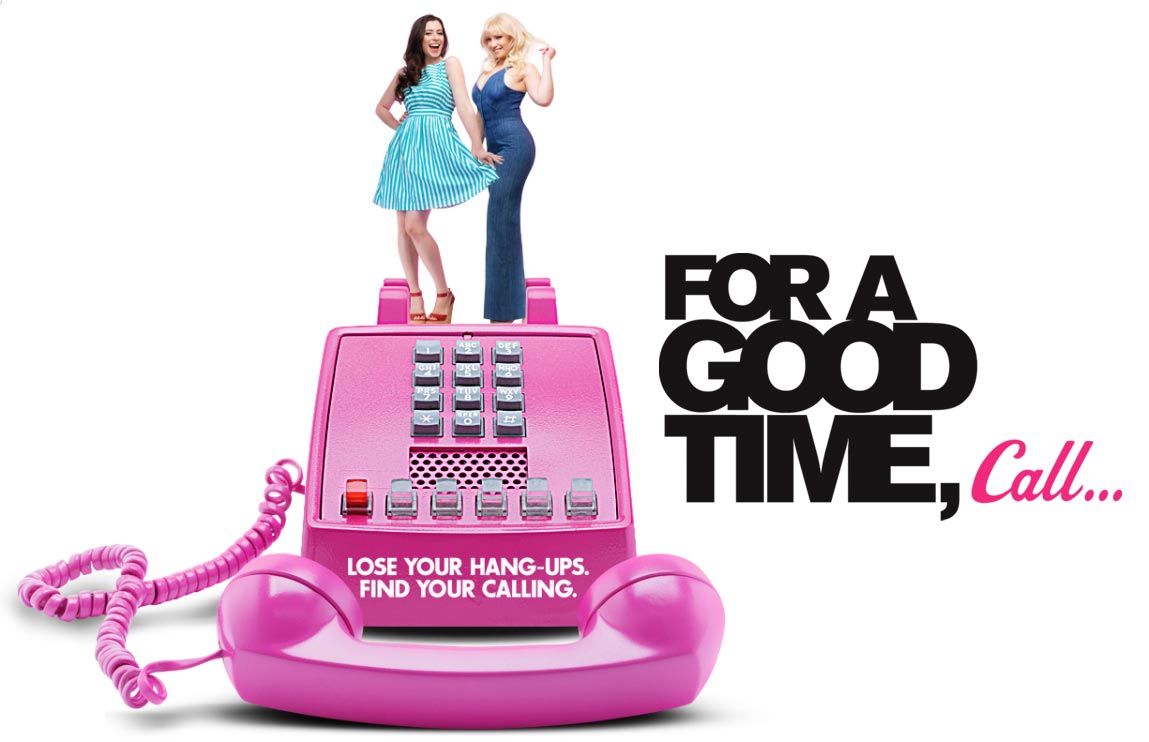
Who do you call..."For A Good Time, Call..."


For A Good Time, Call… is your “not so subtle” typical, American comedy film that explores the budding friendship between two frenemies Lauren and Katie. The responsible editor Lauren (Lauren Miller) and the uncontainable Katie (Ari Gaynor) are polar opposites. However when both come up short on making ends meet financially their shared gay best friend Jesse (Justin Long) reconnects these past enemies and suggest that they become friends. Considering both ladies have nothing in common, Lauren learns that Katie is working as a sex-phone operator and identifies a potential business opportunity...a phone sex hotline. In the end, these roommates realize that maybe they can be more than just business partners, but good girlfriends.

This movie from Toronto-based filmmaker Jamie Travis takes an approach much like fellow director Judd Apatow as he directs this female-driven rudimentary relationship comedy about two New York women who are trying to discover and find themselves in today’s pressured society. To a degree the film comes across more like an extended version of a television sitcom that provides just enough laughter and entertainment to get you through the entire movie. For the most part, the film has a very simple and somewhat predictable premise.

In it’s own unique way with the combination of an eccentric cast and semi-humorous story, For A Good Time, Call…somehow manages to be both sweet and raunchy all in one. The title alone is a great play on words especially as it relates to the dating and sex talk scenes. Unfortunately this idea of creating a phone sex hotline is a bit dated for 2012; and is also difficult to maintain interest for the entire movie, despite all the attempts at basic and crude humor. Although it should be credited that the conversations, behaviors, and emotions are real, which add some authenticity to the film. As the phone sex business seems to make progress the friendship develops as well. Unfortunately the storyline does not add any originality and is really not any different from any other frenenemy type movie.


What is nice about For A Good Time, Call… is the bursting chemistry from all the characters. Each person, regardless of his or her role brings a fresh, playful and candid personality that stays consistent throughout the movie. Graynor and Miller are so charming together however, it seems as though their relationship and friendship is forced to create a happy storyline. Outside of Miller and Graynor characters, the other most amusing character in the film is Justin Long, their gay mutual friend Jesse, who gives a sarcastic yet charismatic performance. In addition, Lauren's parents (Mimi Rogers and Don McManus), who add another bit of appeal.  They always seem to show up at unexpected moments consistently being surprised by their daughter's unrefined roommate. Then there is also a sweet romance between Katie with her faithful caller client Sean (played by Mark Webber) who she has a playful, yet romantic love connection.

For a Good Time, Call… is your typical independent comedy film that appeals to a mass audience in a way that does not “beat around the bush” or sugar coat the content. However it still brings the typical and predictable Hollywood plot lines to the screen. 
Here is a film that caters more to a particular type of woman, one who is in there 20s and maybe early 30s, anyone beyond that may find it difficult to relate to the material. The film can also be seen, as somewhat dated considering the idea of a phone sex hotline has not really been “hot” since the 1990s. What might bring this film to the next level are more story & character development and originality to truly bring this film to life.

Although it has trouble breaking away from predictability once the initial premise is introduced, this comedy shines and spotlight on two up and coming actresses, Lauren Miller and Ari Graynor. If nothing else you will at least be entertained have a good time watching the film.


Rating: 6.5 out of 10

Wednesday, August 29, 2012

Disappearing Acts: Zoe Saldana as Nina Simone & The Erasure of Black Women in Film


Just had to repost!! 


Disappearing Acts: Zoe Saldana as Nina Simone & The Erasure of Black Women in Film
by  Nicole Moore | HuffPost BlackVoices

"I've never changed my hair. I've never changed my color, I have always been proud of myself, and my fans are proud of me for remaining the way I've always been." - Nina Simone

When I think of Nina Simone I think of her dark chocolate skin, her full lips and her tight 'fro. Her looks were and still are every bit as relevant and powerful as the songs she sang. As a matter of fact, her undeniable African features defined and empowered her musical career. So it's no small wonder that people are outraged at hearing last week's confirmed announcement that Zoe Saldana, an Afro-Latina with a café au lait complexion and fine facial features, has been cast as the High Priestess of Soul in an upcoming bio-pic. The fires were fanned this past weekend when an interview by the film's writer and director, Cynthia Mort, surfaced in "Entertainment Weekly" where she talks about the biopic as something seemingly more inspired by Nina with composite characters than a film about Nina and the real-life characters from her life.

Zoe Saldana, best known for her roles in Avatar and Columbiana, may have the acting chops to play the lead in a feature movie, but when it comes to playing Nina Simone, I'm not so sure. It's not simply that Saldana looks nothing like Simone, a woman who could spit out a truthful and caustic Mississippi Goddamn that reminded you in no uncertain terms that she had been rejected because of her skin color. 

Casting Saldana also attempts, if inadvertently, to erase the memory of Simone's revolutionary ebon image from our minds and history's musical canon. Saldana as Simone specifically challenges the message of Simone's music and undermines the power of her well-documented resistance to conventional ideas of beauty and colorism. Nina's success and appeal had as much to do with her talent as it did with her having big lips, wide hips and that Mama Africa bosom. Unlike Lena Horne, Diana Ross & The Supremes, and Tina Turner whose crossover success was as much a result of having talent as well as having sexy live performances and glamorous good looks, Nina used her experiences with racism, colorism and sexism to ignite her music with strength and resilience heard so defiantly in To Be Yong Gifted & Black for example.

Because Simone's blackness extended as much to her musical prowess as to her physicality and image, it's perplexing that the film's production team, led by Jimmy Iovine, expects anyone, particularly in the black community, to (re)imagine Nina Simone as fair-skinned, thin-lipped and narrow-nosed? I guess if you look at Hollywood's history of casting black female roles, especially in biopics, it's not all that surprising.

With a few exceptions – Angela Bassett as Tina Turner, Halle Berry as Dorothy Dandridge and Beyonce as Etta James – Hollywood  has a long history of giving black actresses the finger by casting white women in the lead of films based on the lives of black women -- most famously Elizabeth Taylor as Cleopatra. Angelina Jolie was given the green light to portray Mariane Pearl, an Afro-Cuban Chinese, French writer in the 2007 adaptation of Pearl's A Mighty Heart, which we kinda let slide because, well, it was Angie. But then she was cast again in a role based on a black woman character in the film Wanted, an adaptation of the same titled comic book series in which the main character is a black.

And the real kicker came in 2008 when St"uck, the true life story of African-American Chante Mallard, for which Suvari had the nerve to sport cornrows. If it only requires cornrows and a full-lipped box-office bombshell to secure these roles originally penned as black women, then what's to prevent any blonde, brunette, pale-skinned actress from playing black? And if that's the case, then surely Hollywood types also think a light-skinned Black woman can portray a dark-skinned Black woman.

Tim Burton and the other producers behind Abraham Lincoln: Vampire Huntercertainly thought so when they cast Jacqueline Fleming, a bi-racial woman, as Harriet Tubman. And hell, even Aretha Franklin wants Halle Berry, a bi-racial woman, to play her in her own life story. And yes, Halle is the highest paid Black actress in America, but is that reason enough for her to represent every Black women on the big screen? From X-Men's Storm to Zora Neale Hurston's Janie, to Dorothy Dandrige and now possibly The Queen of Soul, Halle's image has seeped into America's (cinematic) consciousness as the face of every Black woman making it seem like we are this monolithic community of sistas. 

If Aretha, known as much for her voice as much for her thickness (and her taste in hats) doesn't even think full-figured, Oscar-winning actresses Mo'nique or Octavia Spencer would be great choices to portray her life story, I'm really not surprised by Zoe's casting. And I get that actors do not have to resemble the famous personas they portray, but when there are so few empowering images of Black women in TV & film, details like weight, skin color and hair become serious sticking points amongst Black folk.

And doors do not open for Black actresses with dark skin as readily or as often as they do for their male counterparts. Actors like Wesley Snipes, Sidney Poitier, Don Cheadle, Idris Elba, Bill Cosby and Sam Jackson do not encounter the same level of marginalization and erasure as Whoopi Goldberg, Regina King, Viola Davis and Alfre Woodard.

Then there's Tyler Perry, who has produced films like Diary Of A Mad Black Woman and a remake of Ntozake Shange's For Colored Girls, and has cast a number of Black actresses in his movies. Unfortunately, when the lead female character in many of these flicks is a gun-toting, outspoken, Bible-thumping, righteous she-ro named Madea-- Tyler Perry in drag-- and the other Black women are depicted as non-sexual or hyper-sexual, emotionally scarred, spiritually bereft women who just need God, Madea and a man to be happy, self-poised and empowered, then even and especially these portrayals affirm the notion that Black women are monolithic, simple and bordering on irrelevant. If a man in a dress with a gun is a box-office hit and popular with Black audiences then Hollywood takes note and actresses who look like Viola Davis or Regina King find themselves disappearing from the big screen.

Since the announcement of Saldana as the lead in Nina's biopic was made, a petition on Change.org has been created, which demands that Saldana be replaced. Supporters of the petition would rather that role go to Lauryn Hill, Adepero Oduye, India.Arie or Viola Davis. The petition, however, has been met with criticism by some who believe the role of Nina Simone is turning into a debate about one actress being "blacker" than another. Those who support Zoe, who is outspoken about being an Afro-Latina, say that her Blackness should not be defined by the color of her skin or the straightness of her hair. The fact that Zoe is Black Dominican is all that should matter. If standards of Black beauty in this country didn't have a history of being valued and de-valued based upon their semblance to whiteness as the standard then maybe it wouldn't matter.

In 1966, the woman born Eunice Kathleen Waymon penned The Four Women, which begins, "My skin is Black/ My arms are long/ My hair is wooly/ My back is strong/ Strong enough to take the pain/ Inflicted again and again." Nina had the posture, past and physicality to make this song not only brazen, but also believable and therefore revolutionary in it's telling. How can Saldana possibly bring the pain in an afro-wig and, God-forbid, dark makeup? The producers may as well cast Madea because if it's going to be all about make-up, wigs and fat-suits, ain't nobody bringing it like Mr. Perry.

***

Nicole is the Founder and Editor of theHotness.com. Follow her on Twitter:www.twitter.com/thehotnessgrrrl

Tuesday, August 21, 2012

DVD Releases 8/21/2012


Here are this week's DVD releases...

The Dictator (R)
Chimpanzee (G)
A Separation (PG-13)
Bernie (PG-13)
Freelancers (R)

Stay tuned for next week...

Saturday, August 18, 2012

DVD Releases 8/18/2012


One is the loneliest number, but in this case it works out for this movie...

The Hunger Games (PG-13)

And let's not forget all the controversy and the fact that it stayed #1 for 4 weeks straight!!

Wednesday, August 15, 2012

Throwback Flick: Together Brothers (1974)

Here is a film that a friend of mine recommended that I watch since I am a fan of Blaxploitation films (another story). Together Brothers is classic tale of brotherhood, sexuality, class, race, and gender. Thirty-eight years later this film is still very much relevant. 

Together Brothers is a drama filled, gritty film that offers a portrayal of ghetto life within the wave of the 1970s Blaxploitation era. Set in Galveston, Texas a teenage gang comprised of Blacks and Chicanos, ‘the Brothers’ learn that a police officer, Mr. Kool (Ed Bernard), who was seen as a mentor has been found brutally murdered. The twist of the movie is that the only witness is the leader’s 5-year old brother who becomes mute due to what he has seen. As a result of this crime, the group lead by H.J. (Ahmad Nurradin) sets on a mission to track down those responsible for the murder of the popular police officer, as well protecting his little brother from any further harm.

Together Brothers is a sympathetic film that explores ghetto life, from various perspectives. On one end you feel a since of anger for what is seen as a senseless murder, and then there is a torn feeling of sadness and what is considered fair treatment towards a human being. When all else fails whom does one depend on for compassion and safety, their family and or their community? But what if neither is available? 


Together Brothers is not only a film that provides an intriguing story full of twists and surprises, but a naturalistic amateur cast. Director William Graham was brilliant for choosing a group of young, inexperienced actors to help make this picture more authentic and effective. H.J. (Ahmad Nurradin) offers an engaging mix of resourcefulness and bravery as the gang's leader and Tommy (Anthony Wilson) delivers a marvelously expressive turn without any dialogue as the little brother who witnesses the murder. In addition to the younger cast members, adult cast members Ed Bernard is both charming and authoritative as the police officer that the kids secretly admire; and Glynn Turman who although has a brief role plays a vividly drawn and compelling doctor who tries to lend a helping hand to the film's ‘hero’. Marking the first appearance of a transgender person of color in a motion picture, the character of Billy Most (Lincoln Kilpatrick) is presented as your typical deranged and “confused” murderer trope-type character. (S)he is essentially viewed by the neighborhood as a insignificant individual who committed a crime of murder, seemingly for no reason. Each character in their own unique and clever way draws you in with their credible and expressive performances.


As one watches this film, you realize that this intense, urban crime drama opens a serious dialogue regarding self-identity, sexuality, brotherhood, and embracing childhood even when it is viciously taken. This film, content wise, could even still be relevant in 2012 as it also addresses issues of police brutality, class, urbanization, and racial conflict. Even though Together Brothers is considered a Blaxploitation film it does bend the rules of the typical format by ushering a challenging story with characters that are actually allowed to be people instead of one-dimensional, overly-violent or sexualized caricatures. Imagine a film that truly allows for feelings of happiness and sadness from real people, here is a film that does just that.


All in all, Together Brothers is a film that offers an unusual mix social commentary, a street-wise story, and a soulful soundtrack. Some may even say this film was ahead of its time considering it discussed such issues as homosexuality and transgenderism. As a whole, this film is a well-crafted hidden gem that is worthy of rediscovery from fans of the Blaxploitation film era and those interested in a complex, daring and provocative narrative.

Rating: 8 out of 10 stars

Tuesday, August 14, 2012

Dear Hollywood....

Now I could not resist this re-post, this is so very problematic on so many levels. As I was strolling through my Facebook I came across a picture and commentary from Bougie Black Girl that stopped me cold in my tracks... Check it out for yourself...  


It has been reported that Zoe Saldana will replace Mary J. Blige in the role of Nina Simone. Nina Simone was a real life person. We know what she looked like and well it looks like Hollywood is at it again. I for one am outraged. There are far more actresses in Hollywood who could have taken this role.

Let me also say that this is not a slight at Ms. Saldana. She is a great actress but Ms. Salda
na in no way shape or form even looks like the legendary Nina Simone. Nina Simone was a Black woman from Tryon, North Carolina and not a Latina.

Zoe Saldana describes herself by saying "I’m just Zoe. Not a little bit Dominican, not a little bit Puerto Rican, none of that silliness… I am what you want me to be if that’s what it takes for you to overcome your insecurities. As a Latina, I think we should be very proud of our heritage. We tend to look for European roots and reject the indigenous and the African, and that is disgusting. Being Latin is a mix of everything. I want my people to not be as insecure, and to adore what we are because it’s beautiful.”

Nina Simone was a beautiful dark skin Black woman.

Once again Hollywood shows no regard for authenticity when it comes to Black women. In the recent movie called Abraham Lincoln: Vampire Hunter the character of President Abraham Lincoln was portrayed by an actor who looked like one of our nation's greatest presidents. Unfortunately, when casting the role of Harriet Tubman the casting director diverted from this and chose a biracial Dutch actress to play the role of one of America's greatest heroines and former Black slave Harriet Tubman.

I wonder is Hollywood that oblivious to their blatant colorism they display when casting Black women but only conscience of authenticity when it comes to white characters. Only They know they truth.

Black people images have power. This is why it is imperative that we Black women speak up and let our voices be heard. The most powerful thing we can do is control our image if not others will shape it for you.

I can think of four different people who could play this role WAY SO MUCH BETTER (Nicole Beharie, Rutina Wesley, India Arie, Naomi Harris)!! 

What are your thoughts?!


G-Breezy's Favorite Movies

  • Bourne Identity/Supremacy/Ultimatum
  • Die Hard series
  • Do the Right Thing
  • Fracture
  • Idlewild
  • Imitation of Life
  • Inside Man
  • James Bond series
  • Love Jones
  • Malcolm X