Wednesday, December 14, 2011

Interview with Kinyarwanda director/filmmaker Alrick Brown


Kinyarwanda interweaves six different tales that together form one grand narrative that provides the most complex and real depiction yet presented of human resilience and life during the 1994 genocide in Rwanda.  
Grace Gipson (Medium Rare/ Black Savant Cinema) spoke with filmmaker Alrick Brown about the reasons behind bringing this kind of  story to the big screen and his role in the film industry.
Grace Gipson: I noticed that you have a background in English and Education and was curious on what made you decide to become a filmmaker?
Alrick Brown:   I wanted to have a bigger classroom and film was a way to reach more people.  But I have always admired film, I have always loved it and I am always going to be a teacher and an activist and film is just the way for me right now.  I am a writer, I’m a bunch of things, so yeah I guess film is the medium.
GG:  How were you able to make sure that each of the tales had an equal voice to form the overall narrative?
AB:  I didn’t think about it in a sense of equal voice because your always going, when your watching a film you have to know whose perspective it is, whose story it is. And I knew it was the young girl’s story basically and the young boy’s story and all the other stories/elements gave you perspectives on this historical event.  However the even weight that you are speaking of is just making sure that the audience cares about all of the characters. You either fall in love with them, listen to them, respect them, or just care what happens to them.
GG:  Being a filmmaker of color do you feel obligated to bring such stories as Kinyarwanda to the big screen?
AB: Well it’s an interesting question because I’m Jamaican born grew up in Jersey, I’ve lived in France, lived in Africa and this film isn’t essentially an African film.  I was working with Rwandans to make it, so it happens to be black characters, African characters and an African American lead actress Cassandra Freeman (who plays Lt. Rose), but otherwise you know it’s a strong story. As a filmmaker I try to tell good strong stories to humanize and I’m always going try to make sure to portray African American people in the best light to kind of counter the history of negative portrayals, but I just want to tell good stories. As an African American filmmaker I do have a responsibility since I do have a camera and the voice, I do have a responsibility that I make sure that I am doing something meaningful when putting our people on screen.
GG:  Do you see any obstacles as an African American filmmaker?
AB:  There are tons of obstacles. Hollywood is a sexist, racist place and it won’t admit to that openly. You can see examples of certain black people who have excelled and you look at the numbers and you look at the statistics, it is still a very low number of us who participate.   A young white filmmaker can get an easier deal sometimes.  Filmmaking is a tough business for anyone black or white but you know just like the Depression hits an entire economy, it still hits the black people and poor people harder. So if it’s tough already, then just imagine what it is for a black filmmaker or female filmmaker. Our European counterparts can make a bad film here and bad film there and over the years have gotten more chances and so they can still take that risk.
GG: So with Kinyarwanda being considered an indie film by mainstream Hollywood standards, if you had the chance to make bigger budget films, for example,  The Help,  would you and why or why not?
AB: I’m a filmmaker and I look for any opportunities where I can tell good stories  and I try to bring my own personal humanity and my level of craft to any project that I do, irrespective of what the project is or whether it’s a studio or not. The real question is will they let me be myself, will they let me tell the story in a way that I’d like to tell it? I haven’t see The Help, I heard it’s a good movie, but again it’s another example of how we have to be, we can’t just tell a story about black people where we need a white character to mediate the experience. So the black characters are caught up in the Hollywood system and they get comfortable and they say that otherwise people will not see the movie and it’s true the way people have been socialized in this culture. When you don’t have the white character to help along the journey it’s harder to sell it.  I just want to tell good stories, whether it’s in the studio, whether it’s independent or a short film. And if I have a short film in mind I’m going to grab my camera and I’m going to make it.  I’m not going to be a slave to the system because the system dictates me to be a certain way.
GG:  What do want viewers to gain or take away after watching Kinyarwanda?
AB: You know, there’s a couple of things.  Rarely do you get a film of this… and I will say caliber because we are often criticized for not having quality on the screen, when we do political things, when we deal with African Americans or African American subject matter.  I think the quality is there and that’s a testament to my cast and crew and all the work we put in to it.  It’s easier to get a film made but it’s harder to get them seen.  So you know people are getting what they asked for, and I wish our numbers were higher and I wish more people are going out to theaters because they can’t complain now about not giving them what they want. Its there…it’s an alternative to Tyler Perry, it’s an alternative to other things.  On a purely human and spiritual level this film deals with religion and the whole positive portrayal of black people, positive portrayal of Islam. It does so many things, it infuses the idea of forgiveness as opposed to vengeance. So I would hope that this film does something that makes forgiveness a part of the dialogue.
GG:  What do have to look forward to in new and upcoming projects?
AB:  I just wrapped on an ABC episode of a new series out early next year called Final Witness that’s going to be airing on prime time. And then I’m gearing up to start work on a new film called Somebody to Love.  It’s a quaint little piece set in the US. It’s a little bit more relaxed.  It’s a love story and soul music is at the heart of it.
GG:  I thank you and wish you success with this film and your future endeavors.
AB:  Thank you very much.  I very much appreciate it.

Monday, December 12, 2011

Sci-Fi/ Action Double Header Trailer Alert

I know it's been a while, but I have a couple of new trailer alerts that you might want to check out...

First up is for all my G.I. Joe fans... G.I. Joe: Retaliation
Hits theaters June 29th, 2012

And next is the third installment to the MIB series, Men in Black 3

 
Hits theaters May 25th, 2012

Looks like next summer is going to be full of action!!

Friday, December 9, 2011

An Exclusive Preview from the upcoming Spring 2012 flick "Think Like a Man""The Insider"


Check out this exclusive clip and trailer from The Insider on the Steve Harvey Best-Selling book turned to film Think like a Man....


Hits theaters April 2012.


Wednesday, December 7, 2011

A Special Treat For You!!


Stay tuned folks! On tomorrow Black Savant Cinema in conjunction with Medium Rare TV will be conducting an interview with Kinyarwanda film director Alrick Brown!! It is sure to be a treat and we can't wait for you to check it out afterwards.


Thursday, December 1, 2011

Today is World AIDS Day!!


In honor of World AIDS Day I just wanted to showcase a few films that discuss this epidemic...


World AIDS Day is held on 1 December each year and is an opportunity for people worldwide to unite in the fight against HIV, show their support for people living with HIV and to commemorate people who have died.

More than 90,000 people are currently living with HIV in the UK and globally an estimated 33.3 million people have HIV. More than 25 million people between 1981 and 2007 have died from the virus, making it one of the most destructive pandemics in history.

Today, many scientific advances have been made in HIV treatment, there are laws to protect people living with HIV and we understand so much more about the condition. But despite this, people do not know the facts about how to protect themselves and others from HIV, and stigma and discrimination remain a reality for many people living with HIV. World AIDS Day is important as it reminds the public and Government that HIV has not gone away – there is still a vital need to raise money, increase awareness, fight prejudice and improve education.*

World AIDS Day was the first ever global health day and the first one was held in 1988.


1. Philadelphia: Denzel Washington and Tom Hanks brings to light the impact of the AIDS epidemic in this 1993 movie.


2. Angels in America: In transferring Tony Kushner's Pulitzer Prize-winning play to the small screen, director Mike Nichols has crafted a profound, ambitious masterpiece. The film follows a sprawling group of characters as they navigate their way through the cutthroat New York City of the 1980s, when AIDS began to rear its ugly head.  


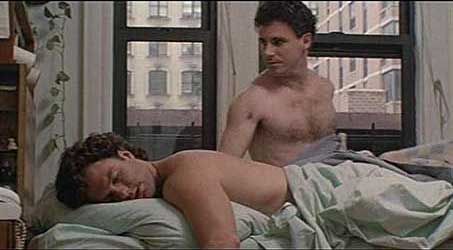
3. Longtime Companion: A movie which concentrates exclusively on the devastating effects of AIDS on a group of middle-class gay men from the years 1981 to 1988.


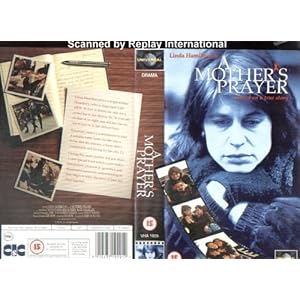
4. A Mother's Prayer: A mother diagnosed with HIV struggles with her own fears while trying to find a family to care for her eight-year-old son.
5. Breaking the Surface- The Greg Louganis Story: The story about an olympic athlete's struggle with HIV.


6. Life and Death on the A-List: A heart-wrenching documentary about Tom McBride's (who some people will remember as the wheelchair bound jock in Friday The 13th: Part 2) life, his fight with AIDS and his death.


7. And the Band Played On: An engrossing adaptation of Randy Shilts' landmark prize-winning document on the onset of AIDS and the fevered manhunt to find the cause and cure of the HIV virus. Compelling storytelling and a remarkable performance by Modine as the head for the Centers for Disease Control facing impossible odds and heartbreaking frustrations. Hallmark for cameo appearances and political correctness it may be but stirring and revelatory nonetheless. Dare not to be moved during Elton John's "The Last Song" as images and names of the disease's victims roll during the closing credits. Directed by Roger Spottiswoode for HBO.


8. Rent: A modern spin on the opera LA BOHEME, RENT tells the story of eight friends dealing with life and love in Manhattan's Alphabet City in 1989. Over the course of a year, the friends face poverty, drug addiction, break-ups, reconciliations, eviction, and AIDS. Despite these challenges, they find support, hope, and acceptance in each other, all the while embracing the bohemian lifestyle that was so much a part of the Lower East Side.


World AIDS Day is an opportunity for you to learn the facts about HIV and put your knowledge into action.


*Information provided by World AIDS Day. org

Wednesday, November 30, 2011

SAY WHAT?!! Short film portrays Black father molested by son


Here is a short film thesis project that is sure to ruffle some feathers...The Strange Thing About The Johnsons and it is definitely strange!!

The American Film Institute thesis film is directed by Ari Aster, is being described as "a film about the ties that bind, and the ties that really bind." The plot revolves around The Johnsons, a well-to-do, upper middle class African-American family, with a disturbing secret. Check this out...the son, Isaiah, has been molesting the father, Sidney, since he was 15-years-old. Years later the father writes a memoir revealing the unlikely father-son relationship. The memoir could possibly destroy the family's wholesome reputation forever.

Now the question that is on everyone's mind is why a white director cast an all-black cast. Aster's response to this concern is... "The color of the Johnson family's skin is totally incidental. It's of no consequence to the story or its execution," Aster said. "We certainly assumed that casting black actors in a film that tackles such transgressive themes would create something of a stir, and it would be a lie to say that we weren't hesitant, especially as many people were advising us against the decision. There is no intended commentary on the black experience and I would never claim to have any insight into that."

Hmmm....sounds real sketchy to me...Something just not quite right with this film, can't quite put my finger on it. This takes twisted drama to a completely different level!! 


TRAILER: The Strange Thing About The Johnsons from Alejandro De Leon on Vimeo.

For more information about the film go to The Strange Thing About The Johnsons website.

Your Thoughts?!!

Indie Doc "Soul Food Junkies" Twitter Chat Tonight 9 PM/EST

 
Soul Food Junkies...
140 Characters At A Time!
www.twitter.com/byronhurt
 
Byron Hurt To Host a Soul Food
Twitter Chat TONIGHT!
Wednesday, November 30, 2011
9:00 - 10:00 pm EST
 
   Login to your Twitter account tonight and get interactive 
with award-winning filmmaker Byron Hurt (@ByronHurt) as
he tweets about the making of his new documentary
film Soul Food Junkies, the food justice movement, and
what he discovered about this beloved African American
cuisine. Questions and comments about the film, living and eating healthy, and other topics are all welcome TONIGHT at 9pm EST.
 
(or search the #SoulFoodJunkies hashtag)
 
 
A little bit about the film...
"Is African American culture a culture of soul food junkies?"
 
Food traditions are hard to change, especially when they're passed on from generation to generation. In this PBS documentary, award-winning filmmaker Byron Hurt shares his journey to learn more about the African American cuisine known as soul food.

Baffled by his dad's unwillingness to change his traditional soul food diet in the face of a health crisis, Hurt sets out to learn more about this rich culinary tradition and its relevance to Black cultural identity. He discovers that the love affair that his dad and his community have with soul food is deep-rooted, complex, and in some tragic cases, deadly.
 
Through candid interviews with soul food cooks, historians, scholars, as well as doctors, family members, and everyday people, Soul Food Junkies blends history, humor, and heartwarming stories to place this culinary tradition under the microscope. Both the consequences and the benefits of soul food are carefully addressed. So too is the issue of low access to quality food in Black communities, which makes it difficult for some Black people to eat healthy. In the end, Hurt determines whether or not Black people are addicted to this food tradition that has its origins in West Africa and the Black south, yet is loved all over the world.

G-Breezy's Favorite Movies

  • Bourne Identity/Supremacy/Ultimatum
  • Die Hard series
  • Do the Right Thing
  • Fracture
  • Idlewild
  • Imitation of Life
  • Inside Man
  • James Bond series
  • Love Jones
  • Malcolm X